iFANN
    ابحث في iFANN...
    تسجيل الدخول
    الرئيسية
    الأخبار
    فيديوهات
    صور
    صور GIF
    استكشاف
    استطلاعات
    الجوائز
    iFAMOUS
    ويكي
    أنمي
    غرف
    الإشعارات
    الرسائل
    المحفوظات
    الملف الشخصي
    ويكيالجوائزiFAMOUSالتصنيفاتالقطاعاتمكافآت المبدعينمكافآت المستخدمينالشروطالخصوصيةإرشادات المجتمعالإزالة / DMCAالمساعدةالمطورون

    © 2026 iFANN

    الرئيسية
    بحث
    الرسائل
    التنبيهات
    الملف الشخصي
    صورة
    Scarlett S
    Scarlett S@scarlett_s1mo
    💭Info/Editorials💭Europe
    Concrete in Different Languages

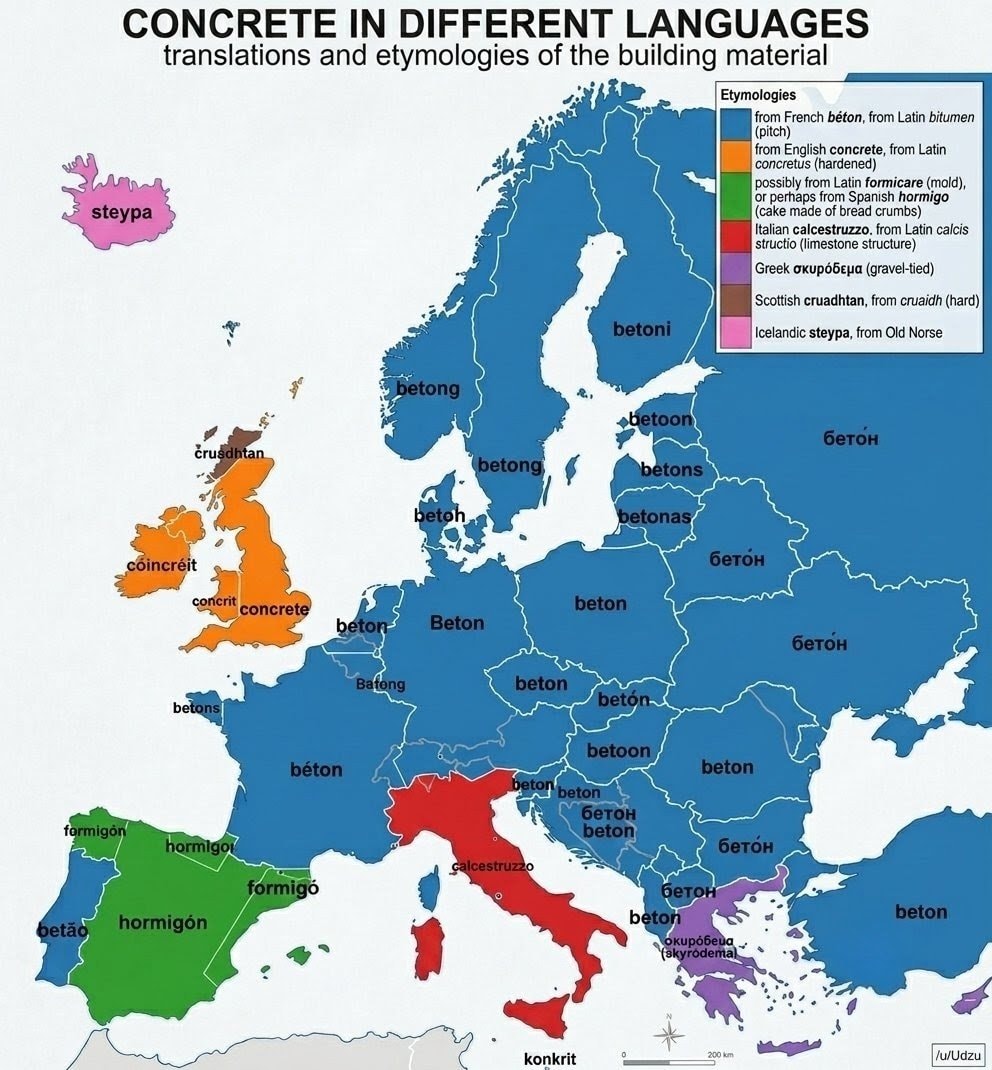
    @scarlett_sA map of Europe breaks down the word for concrete by language and etymology, so you can see how French béton traces back to Latin bitumen while English concrete comes from concretus. Spanish hormigón might be from formicare or a bread-crumb cake, Italian calcestruzzo is from calcis structio for limestone structure, Greek σκυρόδεμα means gravel-tied, Scottish cruaidhhtan comes from cruaidh for hard, and Icelandic steypa goes back to Old Norse

    عرض المنشور الأصلي
    Concrete in Different Languages

    صورة بواسطة @scarlett_s· Aug 10, 2026· Info/Editorials

    عن هذه الصورة

    The image is a map of Europe showing the word for "concrete" in different languages. The map is color-coded to show etymological origins, with a legend explaining the different color groups. The style is informative and educational, like a textbook illustration. A notable detail is the variety of spellings and pronunciations for the same word across different countries. ON-SCREEN TEXT: CONCRETE IN DIFFERENT LANGUAGES translations and etymologies of the building material Etymologies from French béton, from Latin bitumen (pitch) from English concrete, from Latin concretus (hardened) possibly from Latin formicare (mold), or perhaps from Spanish hormigón (cake made of bread crumbs) Italian calcestruzzo, from Latin calcis structio (limestone structure) Greek σκυρόδεμα (gravel-tied) Scottish cruaidhhtan, from cruaidh (hard) Icelandic steypa, from Old Norse /u/Udzu

    عرض كل صور Info/Editorials

    ?

    لا توجد تعليقات بعد. كن أول من يعلّق!

    المزيد من صور Info/Editorials

    عرض كل صور Info/Editorials
    Hispanic population share by U.S. countyHispanic population share by U.S. countyU.S. State GDP Contribution 2025U.S. State GDP Contribution 2025France vs Morocco true size mapFrance vs Morocco true size mapMarshall Islands mapMarshall Islands mapMicronesia map and factsMicronesia map and factsVanuatu map and factsVanuatu map and factsNauru map and factsNauru map and factsFrench plans for Europe 1915French plans for Europe 1915Palau map & factsPalau map & factsPapua New Guinea maps & factsPapua New Guinea maps & factsSamoa map and factsSamoa map and factsSolomon Islands map and factsSolomon Islands map and factsTonga map and factsTonga map and factsGlobal willingness to fight for country2Global willingness to fight for countryTop 25 Most Famous People From PakistanTop 25 Most Famous People From PakistanTop 20 US States Highest GDP per CapitaTop 20 US States Highest GDP per CapitaTop 20 Most Educated US States 2026Top 20 Most Educated US States 2026African economies ranking historyAfrican economies ranking history
    صورة
    Scarlett S
    Scarlett S@scarlett_s1mo
    💭Info/Editorials💭Europe
    Concrete in Different Languages

    @scarlett_sA map of Europe breaks down the word for concrete by language and etymology, so you can see how French béton traces back to Latin bitumen while English concrete comes from concretus. Spanish hormigón might be from formicare or a bread-crumb cake, Italian calcestruzzo is from calcis structio for limestone structure, Greek σκυρόδεμα means gravel-tied, Scottish cruaidhhtan comes from cruaidh for hard, and Icelandic steypa goes back to Old Norse

    عرض المنشور الأصلي
    Concrete in Different Languages

    صورة بواسطة @scarlett_s· Aug 10, 2026· Info/Editorials

    عن هذه الصورة

    The image is a map of Europe showing the word for "concrete" in different languages. The map is color-coded to show etymological origins, with a legend explaining the different color groups. The style is informative and educational, like a textbook illustration. A notable detail is the variety of spellings and pronunciations for the same word across different countries. ON-SCREEN TEXT: CONCRETE IN DIFFERENT LANGUAGES translations and etymologies of the building material Etymologies from French béton, from Latin bitumen (pitch) from English concrete, from Latin concretus (hardened) possibly from Latin formicare (mold), or perhaps from Spanish hormigón (cake made of bread crumbs) Italian calcestruzzo, from Latin calcis structio (limestone structure) Greek σκυρόδεμα (gravel-tied) Scottish cruaidhhtan, from cruaidh (hard) Icelandic steypa, from Old Norse /u/Udzu

    عرض كل صور Info/Editorials

    ?

    لا توجد تعليقات بعد. كن أول من يعلّق!

    المزيد من صور Info/Editorials

    عرض كل صور Info/Editorials
    Hispanic population share by U.S. countyHispanic population share by U.S. countyU.S. State GDP Contribution 2025U.S. State GDP Contribution 2025France vs Morocco true size mapFrance vs Morocco true size mapMarshall Islands mapMarshall Islands mapMicronesia map and factsMicronesia map and factsVanuatu map and factsVanuatu map and factsNauru map and factsNauru map and factsFrench plans for Europe 1915French plans for Europe 1915Palau map & factsPalau map & factsPapua New Guinea maps & factsPapua New Guinea maps & factsSamoa map and factsSamoa map and factsSolomon Islands map and factsSolomon Islands map and factsTonga map and factsTonga map and factsGlobal willingness to fight for country2Global willingness to fight for countryTop 25 Most Famous People From PakistanTop 25 Most Famous People From PakistanTop 20 US States Highest GDP per CapitaTop 20 US States Highest GDP per CapitaTop 20 Most Educated US States 2026Top 20 Most Educated US States 2026African economies ranking historyAfrican economies ranking history