iFANN
    ابحث في iFANN...
    تسجيل الدخول
    الرئيسية
    الأخبار
    فيديوهات
    صور
    صور GIF
    استكشاف
    استطلاعات
    الجوائز
    iFAMOUS
    ويكي
    أنمي
    غرف
    الإشعارات
    الرسائل
    المحفوظات
    الملف الشخصي
    ويكيالجوائزiFAMOUSالتصنيفاتالقطاعاتمكافآت المبدعينمكافآت المستخدمينالشروطالخصوصيةإرشادات المجتمعالإزالة / DMCAالمساعدةالمطورون

    © 2026 iFANN

    الرئيسية
    بحث
    الرسائل
    التنبيهات
    الملف الشخصي
    صورة
    Vojtech
    Vojtech@vojtech1mo
    💭Tech💭artificial intelligence
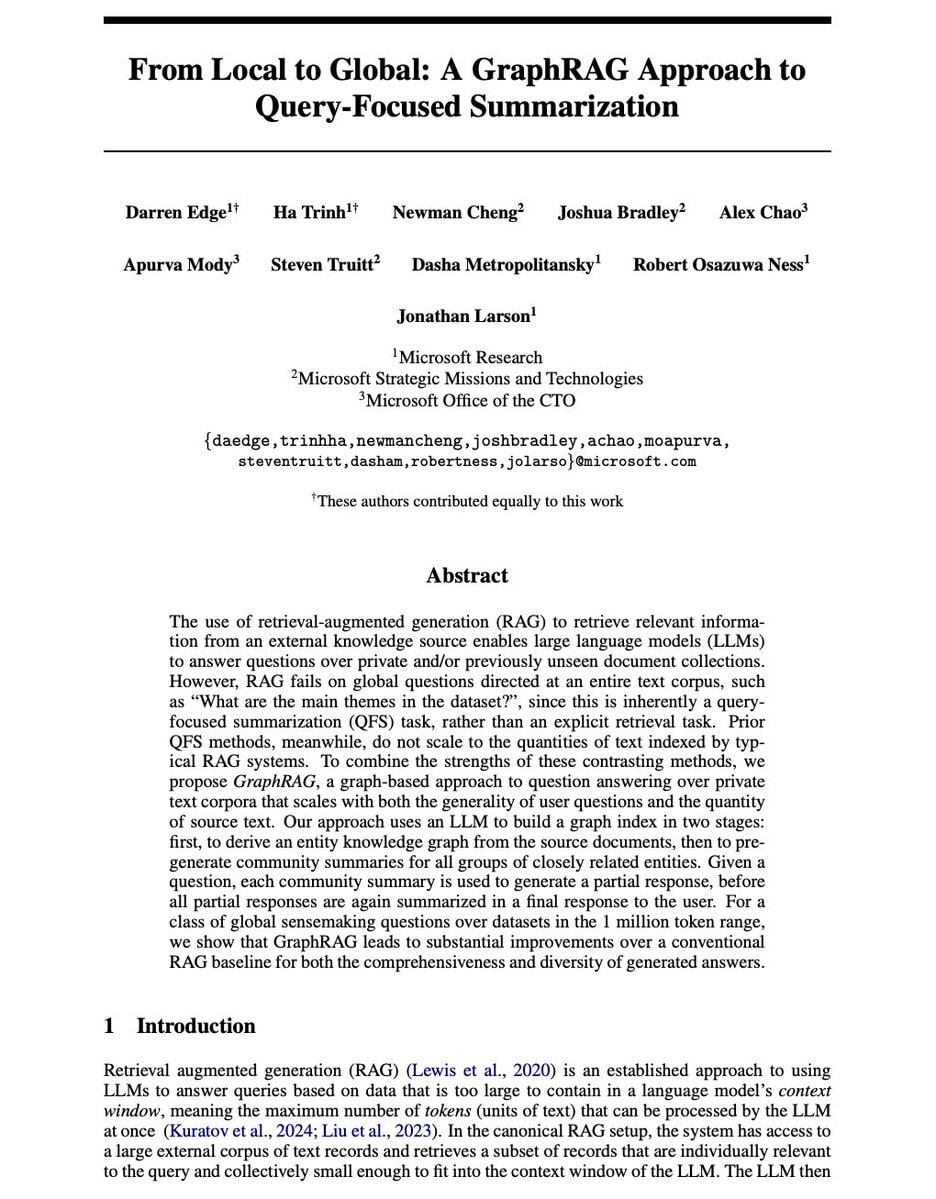
    From Local to Global GraphRAG paper

    @vojtechMicrosoft Research dropped a paper on why question vector search hits a wall with RAG. The system pulls relevant chunks fine but fails when the answer lives in the whole corpus instead of one document. Asking about main themes exposes this gap because no single chunk holds the full picture. Ten authors at Microsoft Research propose a fix where an LLM reads the entire corpus to build an entity graph of facts and relationships rather than paragraphs. It clusters related entities and pre-writes a summary for each one before anyone asks. At query time you don't search. Each summary gives a partial answer then those merge into the final one. This uses map-reduce over structure instead of similarity search over text. On million-token datasets it beat conventional RAG by a wide margin. The evaluation measures comprehensiveness and diversity not accuracy using another LLM as the judge. Indexing requires paying upfront to read everything. If users ask questions about the corpus rather than questions answered by one document, no embedding model solves the problem. The work is titled From Local to Global: A GraphRAG Approach to Query-Focused Summarization.

    عرض المنشور الأصلي
    From Local to Global GraphRAG paper

    صورة بواسطة @vojtech· Aug 16, 2026· Tech

    عن هذه الصورة

    This is a screenshot of a research paper. The title "From Local to Global: A GraphRAG Approach to Query-Focused Summarization" is prominently displayed. Below the title are the names of multiple authors, followed by their affiliations with Microsoft. The abstract and introduction sections of the paper are visible, detailing the research on retrieval-augmented generation. The overall style is academic and professional.

    عرض كل صور Tech

    ?

    المزيد من صور Tech

    عرض كل صور Tech
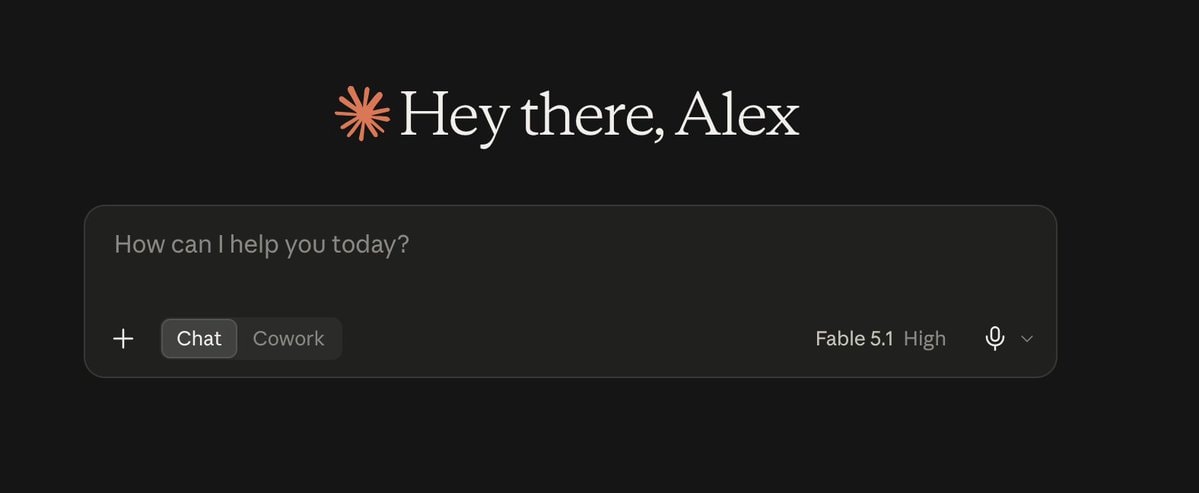
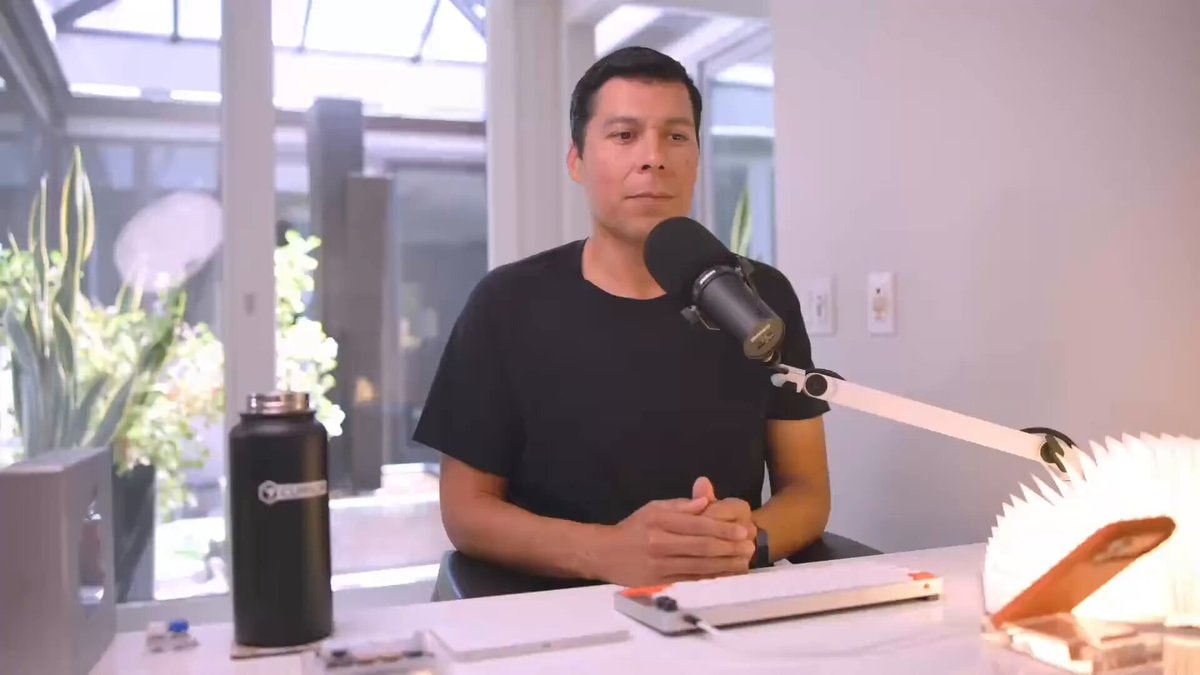
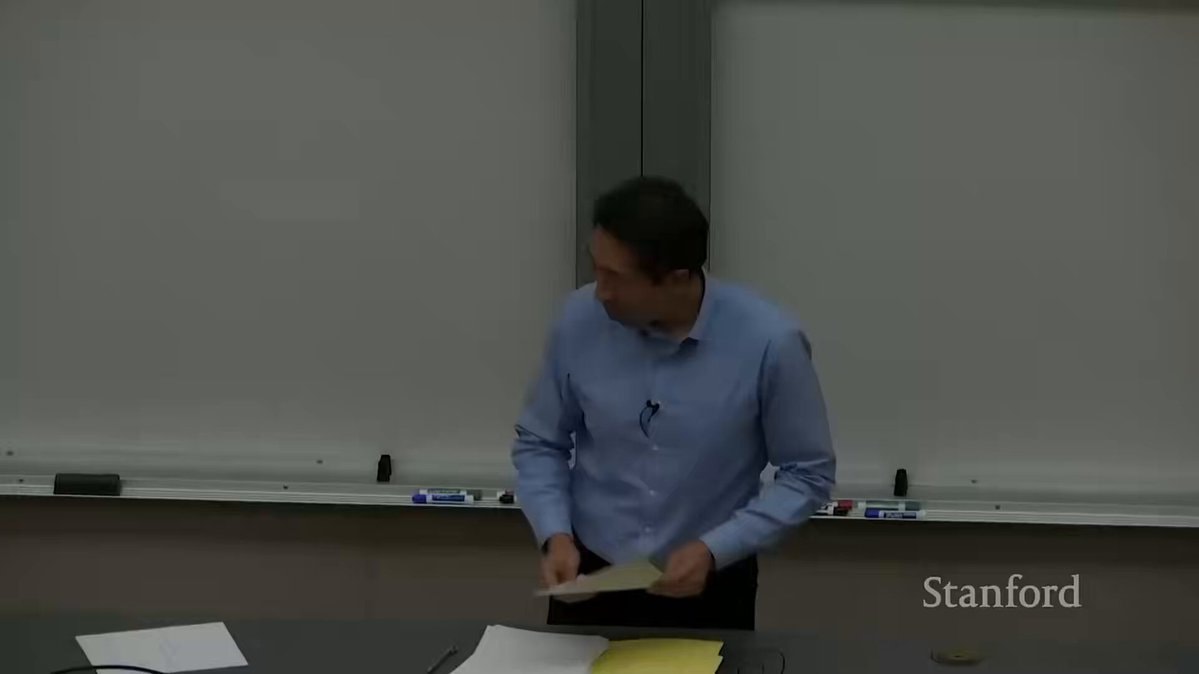
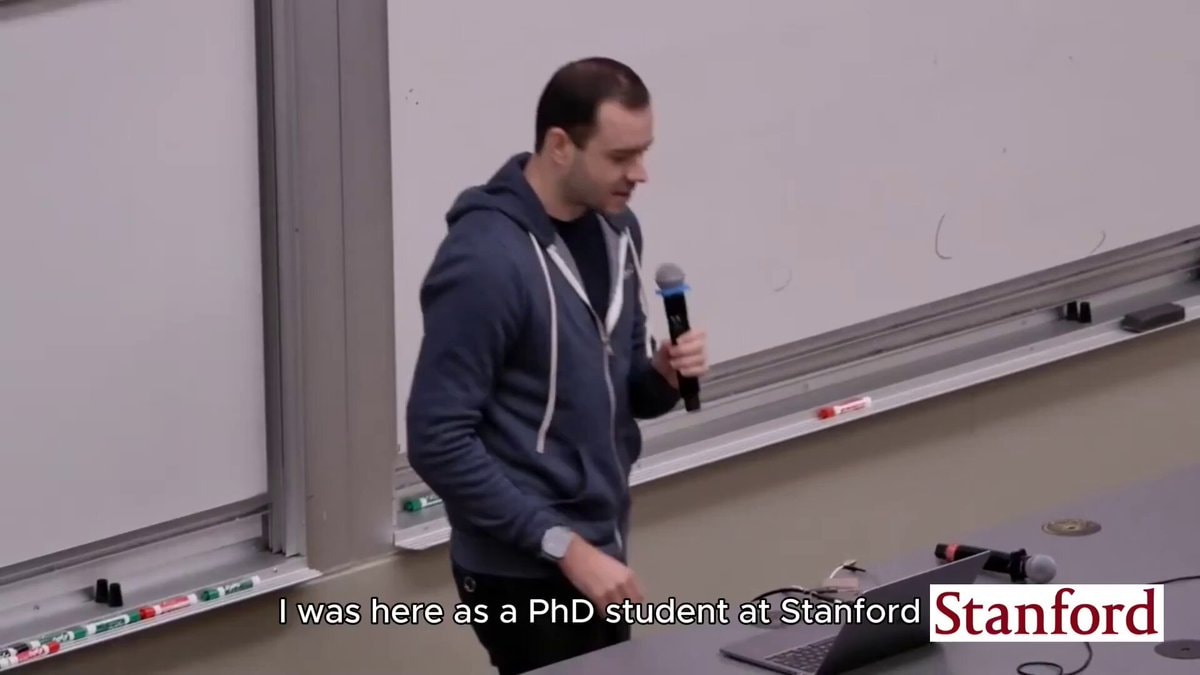
    Audio app beats ChatGPT to #2Audio app beats ChatGPT to #2Andrej Karpathy ChatGPT graph engineeringAndrej Karpathy ChatGPT graph engineeringOmarchy free open source AI operating systemOmarchy free open source AI operating systemSam Altman on LLM progression prompts to graphsSam Altman on LLM progression prompts to graphsSam Altman talks to Z FellowsSam Altman talks to Z FellowsSpaceXAI Grok Bot chief of staff setupSpaceXAI Grok Bot chief of staff setupGrok Bot vs API vs CLI explainedGrok Bot vs API vs CLI explainedJohn Bai Grok Bot design breakdownJohn Bai Grok Bot design breakdownFable 5.1 AI model release guideFable 5.1 AI model release guideGrok Bot 75-minute automation guideGrok Bot 75-minute automation guideAndrew Ng Stanford AI Engineering LectureAndrew Ng Stanford AI Engineering LectureKarpathy Stanford AI engineering lectureKarpathy Stanford AI engineering lectureAlex Finn opinion on sharing passionsAlex Finn opinion on sharing passionsZep Temporal Knowledge Graph ArchitectureZep Temporal Knowledge Graph ArchitectureUnifying Large Language Models and Knowledge GraphsUnifying Large Language Models and Knowledge GraphsGrok Bot setup and featuresGrok Bot setup and featuresLoop vs graph agents explainedLoop vs graph agents explainedGoogle free graph engineering courseGoogle free graph engineering course
    صورة
    Vojtech
    Vojtech@vojtech1mo
    💭Tech💭artificial intelligence
    From Local to Global GraphRAG paper

    @vojtechMicrosoft Research dropped a paper on why question vector search hits a wall with RAG. The system pulls relevant chunks fine but fails when the answer lives in the whole corpus instead of one document. Asking about main themes exposes this gap because no single chunk holds the full picture. Ten authors at Microsoft Research propose a fix where an LLM reads the entire corpus to build an entity graph of facts and relationships rather than paragraphs. It clusters related entities and pre-writes a summary for each one before anyone asks. At query time you don't search. Each summary gives a partial answer then those merge into the final one. This uses map-reduce over structure instead of similarity search over text. On million-token datasets it beat conventional RAG by a wide margin. The evaluation measures comprehensiveness and diversity not accuracy using another LLM as the judge. Indexing requires paying upfront to read everything. If users ask questions about the corpus rather than questions answered by one document, no embedding model solves the problem. The work is titled From Local to Global: A GraphRAG Approach to Query-Focused Summarization.

    عرض المنشور الأصلي
    From Local to Global GraphRAG paper

    صورة بواسطة @vojtech· Aug 16, 2026· Tech

    عن هذه الصورة

    This is a screenshot of a research paper. The title "From Local to Global: A GraphRAG Approach to Query-Focused Summarization" is prominently displayed. Below the title are the names of multiple authors, followed by their affiliations with Microsoft. The abstract and introduction sections of the paper are visible, detailing the research on retrieval-augmented generation. The overall style is academic and professional.

    عرض كل صور Tech

    ?

    المزيد من صور Tech

    عرض كل صور Tech
    Audio app beats ChatGPT to #2Audio app beats ChatGPT to #2Andrej Karpathy ChatGPT graph engineeringAndrej Karpathy ChatGPT graph engineeringOmarchy free open source AI operating systemOmarchy free open source AI operating systemSam Altman on LLM progression prompts to graphsSam Altman on LLM progression prompts to graphsSam Altman talks to Z FellowsSam Altman talks to Z FellowsSpaceXAI Grok Bot chief of staff setupSpaceXAI Grok Bot chief of staff setupGrok Bot vs API vs CLI explainedGrok Bot vs API vs CLI explainedJohn Bai Grok Bot design breakdownJohn Bai Grok Bot design breakdownFable 5.1 AI model release guideFable 5.1 AI model release guideGrok Bot 75-minute automation guideGrok Bot 75-minute automation guideAndrew Ng Stanford AI Engineering LectureAndrew Ng Stanford AI Engineering LectureKarpathy Stanford AI engineering lectureKarpathy Stanford AI engineering lectureAlex Finn opinion on sharing passionsAlex Finn opinion on sharing passionsZep Temporal Knowledge Graph ArchitectureZep Temporal Knowledge Graph ArchitectureUnifying Large Language Models and Knowledge GraphsUnifying Large Language Models and Knowledge GraphsGrok Bot setup and featuresGrok Bot setup and featuresLoop vs graph agents explainedLoop vs graph agents explainedGoogle free graph engineering courseGoogle free graph engineering course