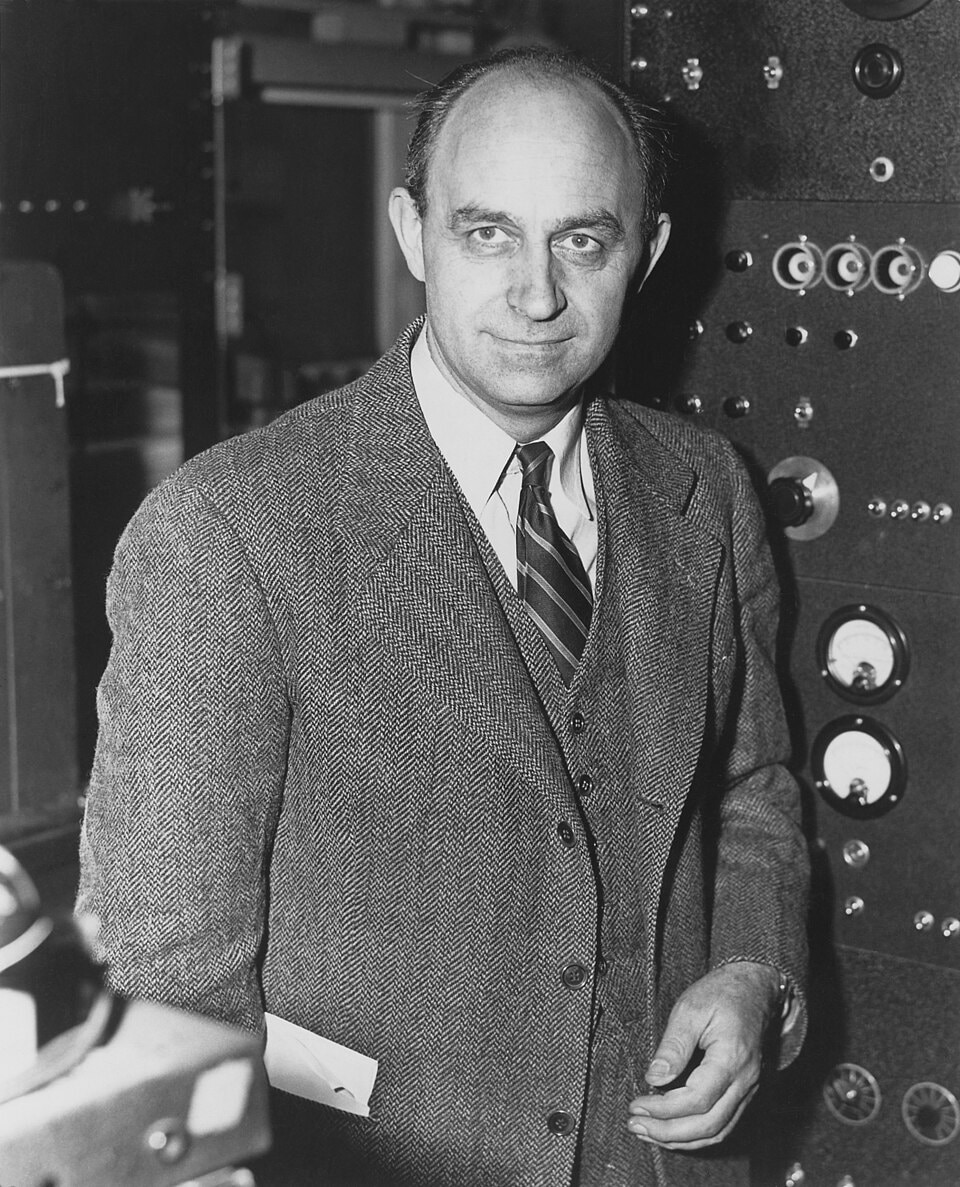
Enrico Fermi
 Italy
Italyphysicist•theoretical physicist•nuclear physicist
تاريخ الميلاد
September 29, 1901
البرج
Libra
مكان الميلاد
Rome, Italy
العمر
توفي عن عمر 53
الطول
5 ft 9 in (1.75 m)
نبذة
Enrico Fermi was an Italian-American physicist widely regarded as one of the most brilliant scientists of the 20th century. He is best known for building the world's first artificial nuclear reactor, Chicago Pile-1, and for his pivotal role in the Manhattan Project. Fermi won the 1938 Nobel Prize in Physics for his demonstrations of new radioactive elements produced by neutron irradiation and for discovering nuclear reactions caused by slow neutrons. His work laid the foundation for the nuclear age, and he is celebrated for his rare mastery of both theoretical and experimental physics.
Fermi's contributions span multiple fields. He formulated the Fermi-Dirac statistics, which describe particles called fermions, and developed a theory of beta decay that postulated the existence of the neutrino. His discovery that slow neutrons are more effective in nuclear reactions revolutionized nuclear physics. After emigrating to the United States in 1938, he joined the Manhattan Project, where he led the team that achieved the first self-sustaining nuclear chain reaction on December 2, 1942. Today, his legacy is honored through the Fermi National Accelerator Laboratory, the Enrico Fermi Award, and the Fermi Paradox, which stems from a casual question he posed about extraterrestrial life.
النشأة والخلفية
وُلد فيرمي في روما لألبيرتو فيرمي، مفتش رئيسي في وزارة الاتصالات، وإيدا دي غاتيس، معلمة مدرسة. تميزت حياته المبكرة بمأساة حين توفي شقيقه الأكبر جوليو فجأة بسبب خراج في الحلق عام 1915. دفعه الفقدان إلى التعمق في دراسته. اكتشف شغفه بالفيزياء والرياضيات بقراءة كتب قديمة من كشك سوق في كامبو دي فيوري، وعلم نفسه مفاهيم معقدة. بحلول سن الرابعة عشرة، كان يصمم محركات كهربائية صغيرة ويدرس رسائل في الميكانيكا التحليلية.
وجد فيرمي روحًا مشابهة له في صديقه إنريكو بيرسيكو، الذي كان يناقش معه مسائل فيزيائية لساعات. بعد تفوقه في دراسته، حصل على منحة دراسية إلى المدرسة العليا العادية المرموقة في بيزا. حصل على درجة البكالوريوس عام 1922 ودكتوراه في الفيزياء عام 1923 من جامعة بيزا. أظهرت أطروحته للدكتوراه حول تشتت الأشعة السينية براعته المبكرة. كانت لحظة محورية عندما حصل على منصب محاضر في الفيزياء الرياضية في جامعة فلورنسا عام 1924. ثم، في عام 1926، طور القوانين الإحصائية التي تحكم الجسيمات التي تخضع لمبدأ استبعاد باولي، المعروفة الآن بإحصائيات فيرمي-ديراك، والتي أسسته فورًا كفيزيائي نظري رائد. في نفس العام، أصبح أستاذًا كاملًا للفيزياء النظرية في جامعة روما سابينزا، وهو منصب أُنشئ خصيصًا له.
المسيرة المهنية
مسيرة فيرمي المهنية هي سلسلة من الاختراقات التأسيسية. في 1933-34، اقترح نظرية اضمحلال بيتا التي افترضت وجود النيوترينو وصاغ تفاعل فيرمي، الذي يصف القوة النووية الضعيفة. في عام 1934، اكتشف أن قصف العناصر بالنيوترونات البطيئة أكثر فعالية بكثير من استخدام النيوترونات السريعة، مما أدى إلى اكتشاف النشاط الإشعاعي المستحث بالنيوترونات. أكسبه هذا العمل جائزة نوبل في الفيزياء عام 1938. استخدم أموال الجائزة للهروب من إيطاليا الفاشية والانتقال إلى الولايات المتحدة.
في عام 1942، في جامعة شيكاغو، قاد فيرمي الفريق الذي صمم وبنى شيكاغو بايل-1، أول مفاعل نووي اصطناعي في العالم. في 2 ديسمبر 1942، حقق أول تفاعل نووي متسلسل ذاتي الاستدامة. في مختبر لوس ألاموس، ترأس قسم F، وعمل على الجوانب النظرية للقنبلة النووية الحرارية. كان حاضرًا في اختبار ترينيتي في 16 يوليو 1945، حيث قدر بشكل شهير مردود القنبلة بإسقاط قصاصات ورق أثناء موجة الانفجار. بعد الحرب، أصبح أستاذًا في معهد الدراسات النووية في جامعة شيكاغو وعمل في اللجنة الاستشارية العامة لهيئة الطاقة الذرية، حيث عارض بشدة تطوير القنبلة الهيدروجينية. واصل البحث في فيزياء الجسيمات، ودرس البيونات والميونات والأشعة الكونية حتى وفاته عام 1954.
الجدول الزمني للمسيرة
الصورة العامة والأسلوب
يُصوَّر فيرمي كعالم القرن العشرين النموذجي: مكثف، مركز، مع خط شعر متراجع، ونظارات، وغالبًا ما يكون غليون في فمه. يُعرف بوضوحه المذهل في التفكير وقدرته على حل المشكلات المعقدة بحسابات بسيطة. تركز وسائل الإعلام وكتاب السير الذاتية على خبرته المزدوجة في النظرية والتجربة، ويطلقون عليه لقب "بابا الفيزياء". يُصوَّر باستمرار كعبقري، وحلال مشاكل لامع، وقائد هادئ وعقلاني تحت الضغط.
لا توجد قاعدة جماهيرية رسمية، لكنه يحظى بالتبجيل من قبل الفيزيائيين ومؤرخي العلوم وطلاب الهندسة. مسائل فيرمي هي عنصر أساسي في تعليم الفيزياء والهندسة، ومفارقة فيرمي هي موضوع رئيسي في العلوم الشعبية والخيال العلمي. تنشر الحسابات المؤسسية في فيرميلاب والمتاحف منشورات عن إرثه بنبرة من التبجيل والافتتان التعليمي.
الشهرة وجمهور المعجبين
Enrico Fermi stands as a towering figure in the annals of science, yet his global fame operates on a different frequency than modern pop icons. As of August 2026, the iFANN Global Fame Engine has evaluated this legendary physicist, but he does not currently hold a placement in the published rankings, meaning no specific ordinal position or score is assigned to him within the top tiers of global celebrity. This absence from the charts reflects his unique status as a historical giant whose influence permeates every physics classroom and laboratory rather than dominating tabloid headlines or social media feeds. While he lacks a formal fanbase with an official name or organized campaigns, the intellectual community reveres him with a devotion that transcends typical fandom. His legacy is sustained by the enduring utility of his theories, which serve as the blueprint for modern technology, and by the cultural mythology surrounding his life. The story of his lunchtime query about extraterrestrial life remains a staple of scientific lore, retold by generations of students and researchers who find wonder in his simple question. Unlike celebrities who rely on public appearances, Fermi's presence is felt through the invisible architecture of his discoveries, creating a silent but profound connection with anyone who understands the universe.
حقائق مثيرة للاهتمام وأساطير
Enrico Fermi possessed a remarkable ability to estimate quantities using simple calculations, a skill now taught globally as Fermi problems. At the Trinity test, he estimated the bomb's yield to be 10 kilotons of TNT by dropping small pieces of shredded paper and measuring how far they were blown by the shockwave. His estimate was remarkably close to the actual yield of 18.6 kilotons. During a lunch discussion with colleagues in 1950, he famously asked, "But where is everybody?" when discussing the probability of extraterrestrial life. This led to the Fermi Paradox. He is one of the very few physicists who was a world-class master of both theoretical and experimental physics. He learned English by reading scientific journals and listening to the radio, but he always spoke with a strong Italian accent. The element fermium (atomic number 100) is named after him. A central piece of cultural mythology involves the "Fermi Paradox," a question regarding the apparent contradiction between the high probability of extraterrestrial civilizations and the lack of evidence for them. This concept originated from a famous lunch conversation in 1950 at the Los Alamos National Laboratory in New Mexico. Another iconic moment occurred on December 2, 1942, at the University of Chicago, where Fermi led a team to successfully initiate the world's first artificial nuclear chain reaction using Chicago Pile-1. This event is widely cited as the birth of the nuclear age. While not a singular performance event, Fermi's Golden Rule and Fermi-Dirac statistics constitute his enduring intellectual legend, underpinning modern technology including smartphones and particle colliders.
اقتباسات بارزة
“If I could remember the names of all these particles, I would have been a botanist.”
“It is no good to try to stop knowledge from going forward. Ignorance is never better than knowledge.”
“There are two possible outcomes: if the result confirms the hypothesis, then you've made a measurement. If the result is contrary to the hypothesis, then you've made a discovery.”
العائلة والحياة الشخصية
تزوج فيرمي من لورا كابون في 19 يوليو 1928. كانت لورا ابنة ضابط بحري إيطالي يهودي بارز. أنجبا طفلين: ابنة، نيلا (مواليد 1931)، وابن، جوليو (مواليد 1936)، سُمي على اسم شقيق فيرمي المتوفى. هربت العائلة من إيطاليا عام 1938 بسبب القوانين العنصرية للنظام الفاشي التي استهدفت لورا. كان فيرمي رجل عائلة مخلصًا، على الرغم من أن عمله كان غالبًا ما يستهلك وقته. توفي بسرطان المعدة في 28 نوفمبر 1954 في شيكاغو، إلينوي.
صلات بارزة
عمل فيرمي عن كثب مع ج. روبرت أوبنهايمر، المدير العلمي لمشروع مانهاتن، وشهد لاحقًا لصالحه. تعاون مع ليو زيلارد في مفاعل شيكاغو بايل-1. قاد القسم الذي عمل على القنبلة النووية الحرارية لإدوارد تيلر، رغم أنه عارض تطويرها لاحقًا. كانت زوجته، لورا فيرمي، كاتبة سيرته الذاتية. أصبحت ابنته، نيلا فيرمي، مؤرخة بارزة.
العلاقات وتاريخ المواعدة
تزوج فيرمي من لورا كابون في 19 يوليو 1928. التقيا من خلال أصدقاء مشتركين في روما، حيث كانت لورا طالبة أدب من عائلة يهودية ميسورة. أنجبا طفلين، نيلا وجوليو. كانت لورا شريكته وكاتبة سيرته الذاتية، وكتبت ذرات في العائلة عن حياتهما. كان الزواج مستقرًا واستمر حتى وفاته في 28 نوفمبر 1954. لا توجد علاقات رومانسية عامة أخرى موثقة من مصادر تاريخية موثوقة. لا توجد سجلات لعلاقات غرامية أو خطوبات قبل لورا أو علاقات عابرة رفيعة المستوى. كانت حياته مكرسة بالكامل تقريبًا لعمله وعائلته.
- متزوجLaura Fermi1928 - 1954التقيا من خلال أصدقاء مشتركين في روما. كانت لورا طالبة أدب من عائلة يهودية ميسورة. أنجبا طفلين، نيلا وجوليو. كانت شريكته وكاتبة سيرته الذاتية.
الوفاة وما بعدها
تُوفي
November 28, 1954 (عن عمر 53 عامًا)
مكان الوفاة
Chicago, Illinois
سبب الوفاة
Stomach cancer
The scientific community reacted with immediate and profound solemnity to the loss of Enrico Fermi, recognizing him as an architect of the atomic age whose untimely death deprived the world of one of its most brilliant and productive physicists. Tributes poured in from peers and institutions alike, cementing his status as a titan of the twentieth century while Physics Today published a feature titled "Enrico Fermi 1901, 1954" to mark the occasion. The news confirmed that the physicist had passed away at his home in Chicago, Illinois, on November 28, 1954, following a battle with stomach cancer that had been diagnosed in 1953 after surgery for a tumor.
Despite treatment attempts, the condition proved fatal, and his final days were spent recovering from the progression of the disease before he succumbed. His funeral remained a private affair attended by family members and close colleagues from the University of Chicago and the Manhattan Project, reflecting the personal nature of his passing rather than a state-sponsored ceremony. Following the service, his ashes were interred at Forest Home Cemetery in Chicago. Posthumously, Fermi has been honored through numerous dedications and educational initiatives that continue to shape modern physics. The Enrico Fermi Institute was established at the University of Chicago, and the Fermi National Accelerator Laboratory in Batavia, Illinois, bears his name as a premier center for particle research.
The U.S. Department of Energy presents the annual Enrico Fermi Award to recognize outstanding contributions to nuclear science, while a scholarship foundation supports students in the field. His intellectual legacy endures through the Fermi Paradox, which remains a subject of intense discussion and publication decades later.
الثروة (قيمة التركة)
$2 Million
تقدير فريق تحرير iFANN
Enrico Fermi was a salaried academic and government scientist who did not amass a significant personal fortune. His net worth at death was modest, and per iFANN's editorial analysis, the current estate value is estimated at $2 Million as of 2026. The estate earns modest royalties from his books, such as Thermodynamics and Nuclear Physics, and from patent rights, though the U.S. government took over most of his nuclear patents in 1944. The Fermi estate is managed by his descendants and is not a commercial enterprise, with no significant annual income stream beyond book royalties and personal property.
الجوائز الفائزة (6)
فاز فيرمي بجائزة نوبل في الفيزياء عام 1938 عن عمله على النشاط الإشعاعي المستحث بالنيوترونات. كما حصل على وسام هيوز (1942)، ووسام فرانكلين (1947)، وجائزة رومفورد (1953)، ووسام ماكس بلانك (1954). تأسست جائزة إنريكو فيرمي تكريمًا له، وكان أول من حصل عليها بعد وفاته في عام 1954.
1938 · الفيزياء
Demonstrations of new radioactive elements produced by neutron irradiation and discovery of nuclear reactions brought about by slow neutrons
1942 · الفيزياء
Contributions to the development of the atomic bomb and nuclear physics
اشتهر بـ
Chicago Pile-1 (first nuclear reactor)
1942 · Lead designer
Manhattan Project
1944 · Head of F Division
Nobel Prize in Physics
1938 · Recipient
Fermi-Dirac statistics
1926 · Developer
Beta decay theory (neutrino postulate)
1933 · Developer
كلمات مفتاحية
حقائق سريعة
- المهنة
- physicist, theoretical physicist, nuclear physicist
- وُلد
- +1901-09-29
- مكان الميلاد
- Rome
- تُوفي
- +1954-11-28
- مكان الوفاة
- Chicago
- الجنس
- ذكر
- الزوج/الزوجة
- Laura Fermi
- البرج
- Libra
التفاصيل الشخصية
- الاسم الكامل
- Enrico Fermi
- الطول
- 5 ft 9 in (1.75 m)
- الزوج/الزوجة
- Laura Fermi
- الأبناء
- Nella Fermi (daughter), Giulio Fermi (son)
- التعليم
- Scuola Normale Superiore in Pisa (undergraduate and doctorate)
الأسئلة الشائعة
بماذا يشتهر إنريكو فيرمي؟
كيف مات إنريكو فيرمي؟
ما هو مفارقة فيرمي؟
هل كان إنريكو فيرمي متزوجًا؟
ما هي جائزة إنريكو فيرمي؟
أشخاص مشابهون
انضم إلى المجتمع
معجب يناقشون