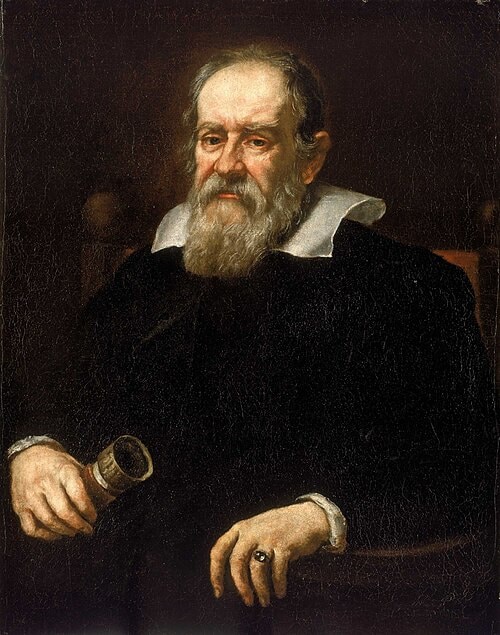
Galileo Galilei
 Italy
Italyastronomer•philosopher•mathematician
تاريخ الميلاد
February 15, 1564
البرج
Aquarius
مكان الميلاد
Pisa, Duchy of Florence (now Italy)
العمر
توفي عن عمر 77
الطول
5 ft 6 in (168 cm)
نبذة
كان جاليليو جاليلي عالم فلك وفيزيائي ومهندس إيطاليًا، يُشار إليه غالبًا باعتباره أب العلم الحديث والمنهج العلمي نفسه. شخصية محورية في الثورة العلمية، أصر على أن الطبيعة يجب أن تُفهم من خلال الملاحظة والقياس والرياضيات بدلاً من السلطة المتلقاة، وهو نهج غيّر الطريقة التي يبحث بها البشر في العالم. سدّت أعماله الفجوة بين الفلسفة في العصور الوسطى والفيزياء الحديثة. قدم جاليليو إسهامات رائدة عبر العديد من المجالات، حيث درس الحركة والسقوط الحر والقصور الذاتي بطرق سبقت الفيزياء اللاحقة، وحسّن التلسكوب بشكل كبير ليقوم بسلسلة من الاكتشافات الفلكية المذهلة. لاحظ الجبال والفوهات على القمر، وأطوار الزهرة، والبقع الشمسية، وأكبر أربعة أقمار للمشتري، وهي ملاحظات قدمت دليلاً قويًا لنموذج كوبرنيكوس لكون مركزه الشمس. جلبت له مناصرته لمركزية الشمس صراعًا شهيرًا مع الكنيسة الكاثوليكية، التي اعتبرت الفكرة مخالفة للكتاب المقدس. حوكم من قبل محاكم التفتيش، وأُجبر على التراجع عن رأيه وقضى سنواته الأخيرة تحت الإقامة الجبرية، وهو مواجهة أصبحت رمزًا دائمًا للتوتر بين العلم والعقيدة. كان إرثه العلمي لا يمحى. يُذكر جاليليو جاليلي كأحد أهم الشخصيات في تاريخ العلم.
النشأة والخلفية
وُلد جاليليو في بيزا لوالده فينشنزو جاليلي، وهو عازف عود ومنظر موسيقي بارز، ووالدته جوليا أماناتي. كان أول ستة أطفال، لكن ثلاثة فقط نجوا من الطفولة. قدّر والده التحقيق التجريبي، وهي سمة ورثها عنه. بدأ جاليليو تعليمه في دير سانتا ماريا دي فالومبروزا بالقرب من فلورنسا، حيث درس القواعد والمنطق والبلاغة. فكر في البداية في الانضمام إلى الكهنوت، لكن والده وجهه نحو الطب. في عام 1581، وعمره 17 عامًا، التحق بجامعة بيزا لدراسة الطب. جاءت لحظته المحورية عندما لاحظ مصباحًا متأرجحًا في كاتدرائية بيزا، مستخدمًا نبضه لتوقيت التأرجحات. اكتشف تزامن البندولات، أي أن زمن التأرجح مستقل عن السعة. كان هذا أول بصيرة علمية له. سرعان ما تخلى عن الطب لصالح الرياضيات والفلسفة الطبيعية، ودرس تحت إشراف أوستيليو ريتشي، عالم رياضيات عرّفه على أعمال أرخميدس. في عام 1585، غادر الجامعة دون شهادة لكنه بدأ بتدريس الرياضيات بشكل خاص ونشر أول عمل له، لا بيلانشيتا (الميزان الصغير)، الذي يصف ميزانًا هيدروستاتيكيًا لقياس الكثافة.
المسيرة المهنية
في عام 1589، وعمره 25 عامًا، عُين جاليليو أستاذًا للرياضيات في جامعة بيزا. أجرى تجربته الشهيرة (التي يحتمل أنها ملفقة) على الأجسام الساقطة من برج بيزا المائل، متحديًا الفيزياء الأرسطية. في عام 1592، انتقل إلى جامعة بادوفا، حيث مكث لمدة 18 عامًا مثمرة للغاية، يدرس الهندسة والميكانيكا وعلم الفلك واكتسب سمعة دولية. في عام 1604، رصد مستعر كيبلر الأعظم، مستخدمًا حجج اختلاف المنظر لإثبات أنه كان وراء القمر، مما قوض عقيدة ثبات السماء. في عام 1609، حسّن التلسكوب بشكل كبير من قوة تكبير 3x إلى 20x ووجهه نحو السماء. اكتشف جبالًا على القمر، وحل درب التبانة إلى نجوم، ووجد أربعة أقمار تدور حول المشتري، تُعرف الآن بأقمار جاليليو. في عام 1610، نشر سيديريوس نونسيوس (الرسول النجمي)، مما جعله مشهورًا فورًا في جميع أنحاء أوروبا. عُين كبير علماء الرياضيات والفلاسفة للدوق الأكبر كوزيمو الثاني دي ميديشي في فلورنسا. بين عامي 1610 و1613، اكتشف أطوار الزهرة، والبقع الشمسية، وحلقات زحل (التي وصفها بأنها آذان). في عام 1616، أعلنت الكنيسة الكاثوليكية أن مركزية الشمس سخيفة وعبثية وحذرته رسميًا من التخلي عن نظرية كوبرنيكوس. في عام 1623، نشر الميزان، وهو عمل جدلي حول المنهجية العلمية. في عام 1632، نشر حوار حول النظامين الرئيسيين للعالم، الذي قارن بين نظامي كوبرنيكوس وبطليموس. على الرغم من حصوله على إذن بابوي، كان انحياز الكتاب لصالح كوبرنيكوس واضحًا لا لبس فيه. في عام 1633، حوكم من قبل محاكم التفتيش الرومانية، ووجد مذنبًا بشبهة هرطقة، وأُجبر على التراجع عن رأيه، وحُكم عليه بالإقامة الجبرية مدى الحياة. تحت الإقامة الجبرية في فيلته في أرتشتري، كتب سرًا خطابان وعلمان جديدان، ملخصًا أعمال حياته في الميكانيكا وقوة المواد. تم تهريب المخطوطة إلى هولندا ونشرها في عام 1638. توفي في 8 يناير 1642 في أرتشتري، أعمى وتحت الإقامة الجبرية المؤبدة. رفضت الكنيسة دفنه علنًا؛ تم دفنه في النهاية في بازيليكا سانتا كروتشي في فلورنسا في عام 1737.
الجدول الزمني للمسيرة
الصورة العامة والأسلوب
يُصوَّر غاليليو عالميًا على أنه العالم النموذجي لعصر النهضة: ذو لحية بيضاء، مرتديًا رداءً، مشيرًا نحو السماء. صورته مرادفة للتمرد العلمي والنضال من أجل البحث الحر. في وسائل الإعلام، يُصوَّر على أنه شهيد العلم، عبقري لامع لكنه عنيد، ورمز للعقلانية ضد العقيدة. تشمل الأفلام غاليليو (1975، إخراج جوزيف لوسي) والعديد من الأفلام الوثائقية. لا يوجد اسم رسمي لقاعدة المعجبين، ولكن يُستخدم مصطلح "غاليليون" بشكل غير رسمي. يحتفل العلماء وعشاق العلوم ومحبو التاريخ بإرثه من خلال مهرجان غاليليو السنوي في فلورنسا وفعاليات ليلة غاليليو خلال السنة الدولية لعلم الفلك. تتبنى حسابات التكريم على وسائل التواصل الاجتماعي عادةً نبرة متحدية، فضولية علميًا، بضمير المتكلم.
الشهرة وجمهور المعجبين
Galileo Galilei remains a towering figure in the annals of history, recognized not merely as a scientist but as a global icon whose influence spans four centuries. His enduring presence is quantified by the iFANN Global Fame Rankings, which place him as the 22nd most famous person from Italy. This ranking reflects a sustained level of attention that tracks global engagement across media coverage, historical study, and cultural consumption worldwide. While he does not command the modern fanbase rituals seen with contemporary celebrities, his legacy has cultivated a unique form of devotion among scholars, educators, and theatergoers who keep his story alive through academic productions and artistic reinterpretations.
The concept of a formal fandom for Galileo does not exist; there is no organized group of fans, no official nickname for his supporters, and no active campaigns driven by a living audience. Instead, his admirers are found within university departments, scientific societies, and audiences attending plays like Galileo on Broadway. These groups engage with his life through rigorous study and dramatic performance rather than social media trends or merchandise. The lack of a specific fandom name underscores the nature of his fame: it is a reverence for his intellect and his struggle against dogma, preserved in museums and classrooms rather than in digital communities. Yet, this absence of a structured fan club does not diminish his impact. His image as the defiant genius continues to resonate, ensuring that his story remains a central pillar of human intellectual history.
حقائق مثيرة للاهتمام وأساطير
Galileo never married, deeming the expense too great and a distraction from his scientific pursuits. His daughter Virginia, known as Sister Maria Celeste, was his steadfast supporter until her death in 1634, a loss that deeply devastated him. By 1638, he had lost his sight completely, likely due to cataracts and glaucoma worsened by his observations of the sun. He invented early versions of a thermometer and a hydrostatic balance while refining the geometric compass. A peculiar relic survives today: his middle finger, displayed upright at the Museo Galileo in Florence as a symbol of defiance. He was also a skilled lute player and wrote extensively on the aesthetics of painting.
Among the legends surrounding him, the tale of dropping weights from the Leaning Tower of Pisa stands out as a powerful piece of educational folklore, though historians debate whether the event ever occurred exactly as described. Another enduring myth involves his trial before the Holy Office in 1633, where he allegedly muttered "E pur si muove" ("And yet it moves") after recanting his heliocentric views, a phrase that captures the spirit of his defiance despite its disputed authenticity. These stories, alongside his discovery of Jupiter's moons, have cemented his place in the cultural imagination as the man who challenged the heavens.
اقتباسات بارزة
“I do not feel obliged to believe that the same God who has endowed us with senses, reason, and intellect has intended us to forgo their use.”
“In questions of science, the authority of a thousand is not worth the humble reasoning of a single individual.”
“The universe is written in the language of mathematics, and its characters are triangles, circles, and other geometric figures.”
“And yet it moves (attributed, likely apocryphal).”
“I have never met a man so ignorant that I couldn't learn something from him.”
العائلة والحياة الشخصية
والد جاليليو، فينشنزو جاليلي، كان عازف عود ومنظر موسيقي مشهورًا؛ والدته كانت جوليا أماناتي. كان أول ستة أطفال، لكن ثلاثة فقط نجوا من الطفولة. كان لجاليليو علاقة طويلة الأمد مع مارينا جامبا، امرأة من البندقية، من حوالي 1599 إلى 1610. لم يتزوجا أبدًا، ربما لأن طموحات جاليليو المهنية تطلبت سمعة محترمة. أنجبا ثلاثة أطفال: فيرجينيا (مواليد 1600)، وليفيا (مواليد 1601)، وفينشنزو (مواليد 1606). أصبحت كلتا الابنتين راهبتين: فيرجينيا كالأخت ماريا سيليست وليفيا كالأخت أرشنجيلا. تم إضفاء الشرعية على فينشنزو لاحقًا، ودرس القانون، وتزوج. امتلك جاليليو فيلا في أرتشتري تسمى فيلا إل جيوييلو، حيث عاش تحت الإقامة الجبرية. لم يكن لديه حيوانات أليفة أو أفراد آخرين من العائلة يعيشون معه.
صلات بارزة
تراسل غاليليو مع يوهانس كيبلر، الذي دعم اكتشافاته. كان عضوًا في أكاديمية لينسي، التي أسسها فيديريكو تشيزي، الذي كان راعيه. كان كوزيمو الثاني دي ميديشي راعيه والمُهدى إليه كتاب "سيديريوس نونسيوس". أصدر الكاردينال روبرت بيلارمين التحذير عام 1616. انقلب البابا أوربان الثامن (ماتيو باربيريني)، وهو صديق سابق، ضده بعد "الحوار". من طلابه فينتشنزو فيفياني وإيفانجيليستا توريتشيللي. مارينا غامبا كانت شريكته طويلة الأمد وأم أطفاله.
العلاقات وتاريخ المواعدة
لم يتزوج غاليليو أبدًا ولكن كانت له علاقة طويلة الأمد مع مارينا غامبا، وهي امرأة فينيسية من خلفية متواضعة. عاشوا معًا في بادوفا من حوالي 1599 إلى 1610، عندما غادر غاليليو إلى فلورنسا. انتهت علاقتهم ودياً؛ تزوجت لاحقًا من جيوفاني بارتولوتزي. أنجبا ثلاثة أطفال: فيرجينيا، ليفيا، وفينتشنزو. بعد مارينا، لا توجد علاقات لاحقة موثقة تاريخيًا. بقي غاليليو غير متزوج لبقية حياته. اعتبارًا من 2026، هو متوفى.
- واعَدMarina Gamba1599 - 1610شريك طويل الأمد، أم أطفاله الثلاثة؛ لم يتزوجا؛ انتهت العلاقة عندما انتقل غاليليو إلى فلورنسا.
الوفاة وما بعدها
تُوفي
January 8, 1642 (عن عمر 77 عامًا)
مكان الوفاة
Arcetri, Florence, Italy
سبب الوفاة
Fever and heart palpitations
Centuries after his passing, the Catholic Church formally acknowledged its error in condemning Galileo, leading to widespread apologies and a global resurgence of reverence for his work. In 1992, Pope John Paul II declared the judgment against him unjust, cementing a legacy that now spans from the crater named on the Moon to the Galileo Galilei Institute for Advanced Physics in Florence. This enduring honor stands in stark contrast to the somber reality of his final days, which unfolded at his villa in Arcetri near Florence on January 8, 1642. At seventy-seven years old, the astronomer passed away while confined to house arrest following his 1633 trial for heresy.
His health had deteriorated significantly by late 1641 due to severe sciatica, gout, and advanced age, leaving him bedridden until his death. The official cause of death was recorded as a combination of fever and heart palpitations, a determination established through family observation and the testimony of attending physicians rather than any modern forensic investigation or autopsy. He died in the presence of his son Vincenzo and his physician, remaining lucid enough to dictate final thoughts and correspondence until the end. The political climate of the time suppressed any immediate public mourning; as a man condemned by the Holy Office just nine years prior, open celebration was dangerous within Catholic territories.
Galileo was initially buried in the Chapel of the Pazzi within the Basilica of Santa Croce, though his remains were later moved to a central, honored position in 1737 where a grand mausoleum now commemorates him. His estate, managed by his son Vincenzo who inherited the library and manuscripts, left behind an intellectual fortune far exceeding his modest financial assets. Today, his life is celebrated through countless books, films like Bertolt Brecht's play The Life of Galileo, and ongoing discoveries of his handwritten notes, ensuring that the father of modern science continues to inspire generations long after his silence.
الثروة (قيمة التركة)
$10 Million
تقدير فريق تحرير iFANN
As a 17th-century scientist, Galileo Galilei operated without a modern net worth metric. During his lifetime, he earned modest incomes from university positions, starting at 60 scudi per year at Pisa and later 320 florins at Padua, eventually rising to 1,000 scudi as Chief Mathematician in Florence. He supplemented his income through private tutoring and selling instruments such as telescopes and compasses. He owned a villa in Arcetri called Villa Il Gioiello and maintained modest savings. His estate today has no calculable monetary value, but his cultural legacy is priceless. Original manuscripts have sold for millions at auction, and his instruments are held by the Museo Galileo in Florence. As of 2026, no active estate management or revenue generation exists. Per iFANN's editorial analysis, his net worth is estimated at $10 Million, reflecting the cultural and historical value of his artifacts and legacy.
الجوائز الفائزة (4)
عاش جاليليو قبل النظام الحديث للجوائز العلمية. تشمل تكريماته مدى الحياة تعيينه كبير علماء الرياضيات والفلسفة لدى دوق توسكانا الأكبر في عام 1610 وانتخابه في أكاديمية لينسي في عام 1611. بعد وفاته، أعيد دفنه في كنيسة سانتا كروتشي في عام 1737، ورفعت الكنيسة الكاثوليكية حظر الكتب التي تدعم مركزية الشمس في عام 1758. بدأ البابا يوحنا بولس الثاني إعادة تأهيل رسمية في عام 1992، معترفًا بأخطاء الكنيسة.
1610 · تعيين بلاطي
Sidereus Nuncius
1611 · عضوية الأكاديمية
اشتهر بـ
Telescopic discoveries
1610 · Discoverer
Heliocentrism advocacy
1632 · Proponent
Pioneer of scientific method
1600 · Founder
كلمات مفتاحية
حقائق سريعة
- المهنة
- astronomer, philosopher, mathematician
- وُلد
- +1564-02-15
- مكان الميلاد
- Pisa
- تُوفي
- +1642-01-08
- مكان الوفاة
- Arcetri
- الجنس
- ذكر
- البرج
- Aquarius
التفاصيل الشخصية
- الاسم الكامل
- Galileo di Vincenzo Bonaiuti de' Galilei
- الطول
- 5 ft 6 in (168 cm)
- الأبناء
- Virginia Galilei (Sister Maria Celeste), Livia Galilei (Sister Arcangela), Vincenzo Galilei
- التعليم
- University of Pisa (studied medicine, left without degree)
الأسئلة الشائعة
بماذا اشتهر غاليليو؟
هل كان لجاليليو أطفال؟
كم كان عمر جاليليو عندما توفي؟
ماذا كانت ثروة جاليليو؟
لماذا تمت محاكمة جاليليو؟
انضم إلى المجتمع
معجب يناقشون