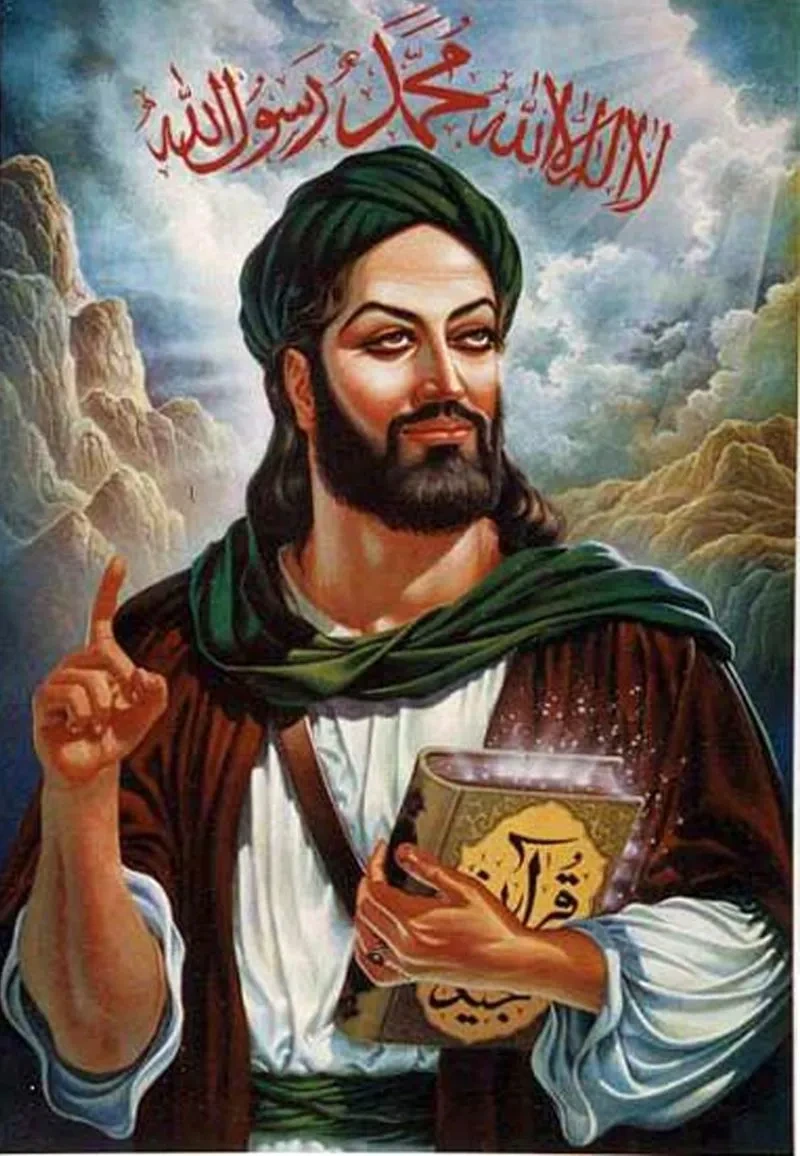
Muhammad
 Saudi Arabia
"Founder of Islam and final prophet"
نبذة
Muhammad ibn Abdullah (c. 570–632 CE) was an Arab religious, political, and military leader who founded Islam, one of the world's major religions. Born in Mecca into the Banu Hashim clan of the Quraysh tribe, he was orphaned early and raised by his grandfather and uncle. Around 610 CE, while meditating in the Cave of Hira, he received the first of many revelations from the angel Gabriel, which were later compiled into the Quran. After facing persecution in Mecca, he and his followers migrated to Medina in 622 CE, an event known as the Hijra, where he established a multi-religious community under the Constitution of Medina. Over the next decade, he led military campaigns against the Meccans, culminating in the bloodless conquest of Mecca in 629 CE. By his death in 632 CE, he had unified most of the Arabian Peninsula under Islam.
Muhammad's teachings and practices, recorded in the Quran and Hadith, form the foundation of Islamic theology and law (Sharia). He is considered the Seal of the Prophets, the final messenger in a line that includes Abraham, Moses, and Jesus. His life serves as the ideal moral example for Muslims, who follow his Sunnah (customs) in daily life. The Five Pillars of Islam, faith, prayer, charity, fasting, and pilgrimage, originate from his teachings. His legacy extends beyond religion: he was a statesman who forged a unified polity, a military commander who led decisive battles, and a social reformer who improved the status of women, abolished female infanticide, and established welfare systems.
In 1978, historian Michael H. Hart ranked Muhammad first in his book The 100: A Ranking of the Most Influential Persons in History, citing his unparalleled impact on both religious and secular spheres. Today, Islam has over 1.8 billion followers worldwide, making it the second-largest religion. Muhammad's name is spoken with reverence by Muslims, who often add the honorific "peace be upon him" after it. His tomb in Medina, beneath the Green Dome of Al-Masjid an-Nabawi, remains a major pilgrimage site. Despite controversies in Western media over depictions and historical criticisms, his influence on global culture, law, and spirituality remains profound.
المنتجات والعلامات الفرعية
الأسئلة الشائعة
من هو محمد؟
ما هي ثروة محمد في عام 2026؟
كم كان عمر محمد عندما توفي؟
لماذا محمد مهم؟
هل لا يزال محمد يُبجَّل اليوم؟
كلمات مفتاحية
المصادر
معلومات الشركة
- تأسس
- 610 CE
- المؤسس
- Muhammad ibn Abdullah
- المقر
- Mecca (birthplace), Medina (burial place)
- القطاع
- Religion
- المهنة
- Prophet, statesman, military leader
- وُلد
- c. 570 CE
- مكان الميلاد
- Mecca
- تُوفي
- June 8, 632 CE
- مكان الوفاة
- Medina
- الجنس
- ذكر
- الزوج/الزوجة
- Khadija, Sawda, Aisha, Hafsa, Zaynab bint Khuzayma, Zaynab bint Jahsh, Umm Salama, Juwayriyya, Ramla, Safiyya, Rayhana, Maymunah, Maria
- البرج
- Sagittarius
انضم إلى المجتمع
معجب يناقشون