نظرة عامة
The Ramayana stands as one of the two great Sanskrit epics of ancient India, composed roughly between 500 and 100 BCE. Traditionally attributed to the sage Valmiki, this text serves as a foundational pillar of Hindu literature and culture. It is classified as an itihasa, a genre blending history with mythological narrative, and functions as a smriti, or remembered tradition. The epic comprises approximately 24,000 shlokas organized into seven books known as kandas.
Prince Rama, the seventh avatar of Vishnu, takes center stage in a story that begins in the kingdom of Kosala. Born to King Dasharatha in Ayodhya, Rama wins the hand of Sita by bending the mighty bow of Lord Shiva. Palace intrigue soon forces his exile for fourteen years, a journey he undertakes with Sita and his loyal half-brother Lakshmana. During their time in the forest, Sita falls victim to Ravana, the demon-king of Lanka, who abducts her driven by lust and ego.
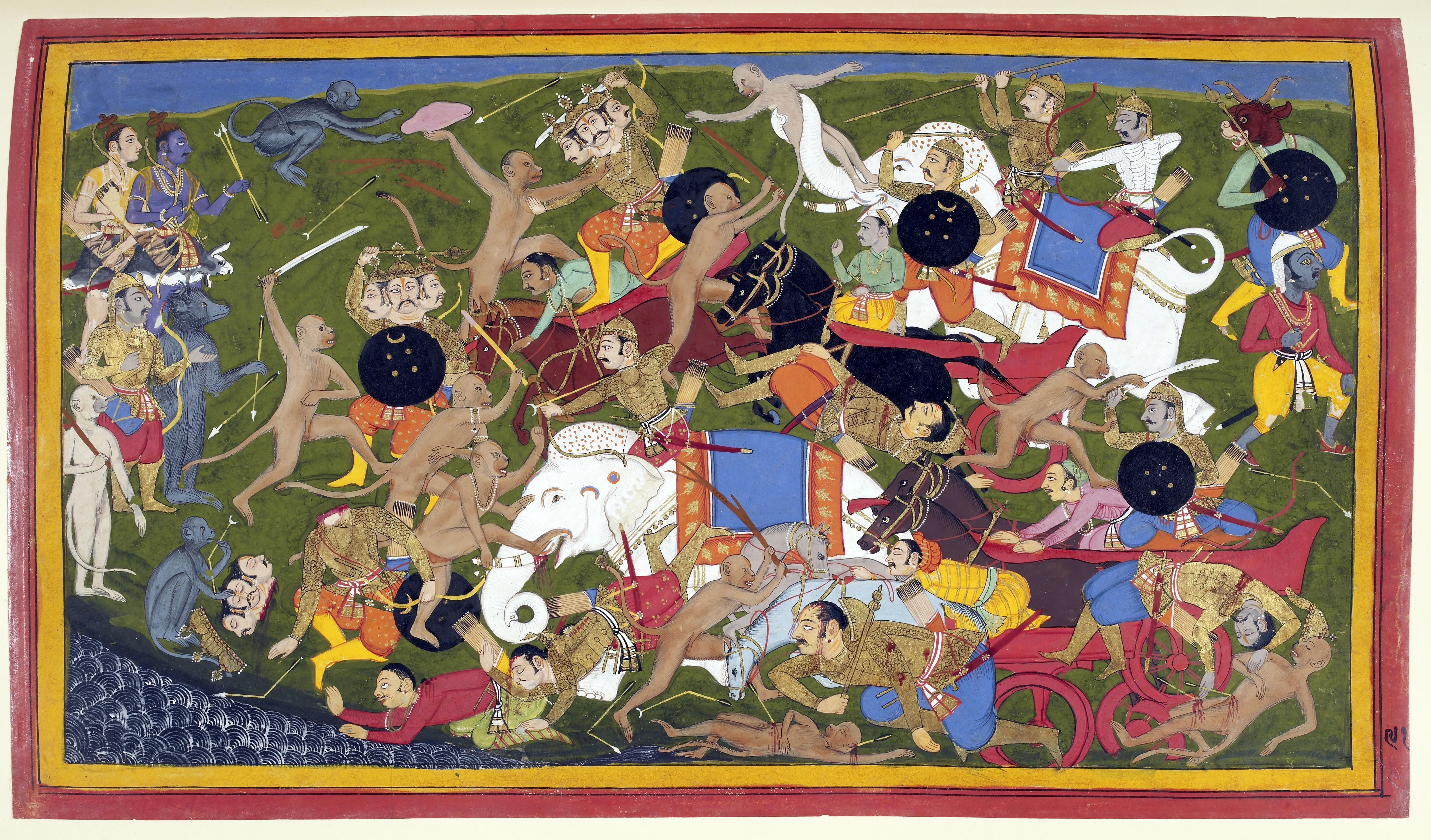
Rama rallies an alliance with Sugriva, the monkey king, and his devoted general Hanuman to rescue his wife. The narrative builds toward the Yuddhakanda, a massive war where Rama defeats Ravana to restore cosmic order. While the final book, the Uttarakanda, details his return and coronation, it also includes controversial episodes regarding Sita's trial by fire. This work remains a profound exploration of duty, righteousness, and the triumph of good over evil.
كلمات مفتاحية
المصادر
معلومات الكتاب
- المؤلف
- Valmiki
- اللغة
- Sanskrit
- المؤلف
- Valmiki
- اللغة
- Sanskrit
- Composed
- c. 500–100 BCE
- Verses
- ~24,000 shlokas
- Books
- Seven kandas
- النوع
- Itihasa (epic)
- Notable Adaptations
- Ramcharitmanas (16th c.), Kambaramayanam (12th c.)
- Recent Film Release
- November 2026
انضم إلى المجتمع
معجب يناقشون