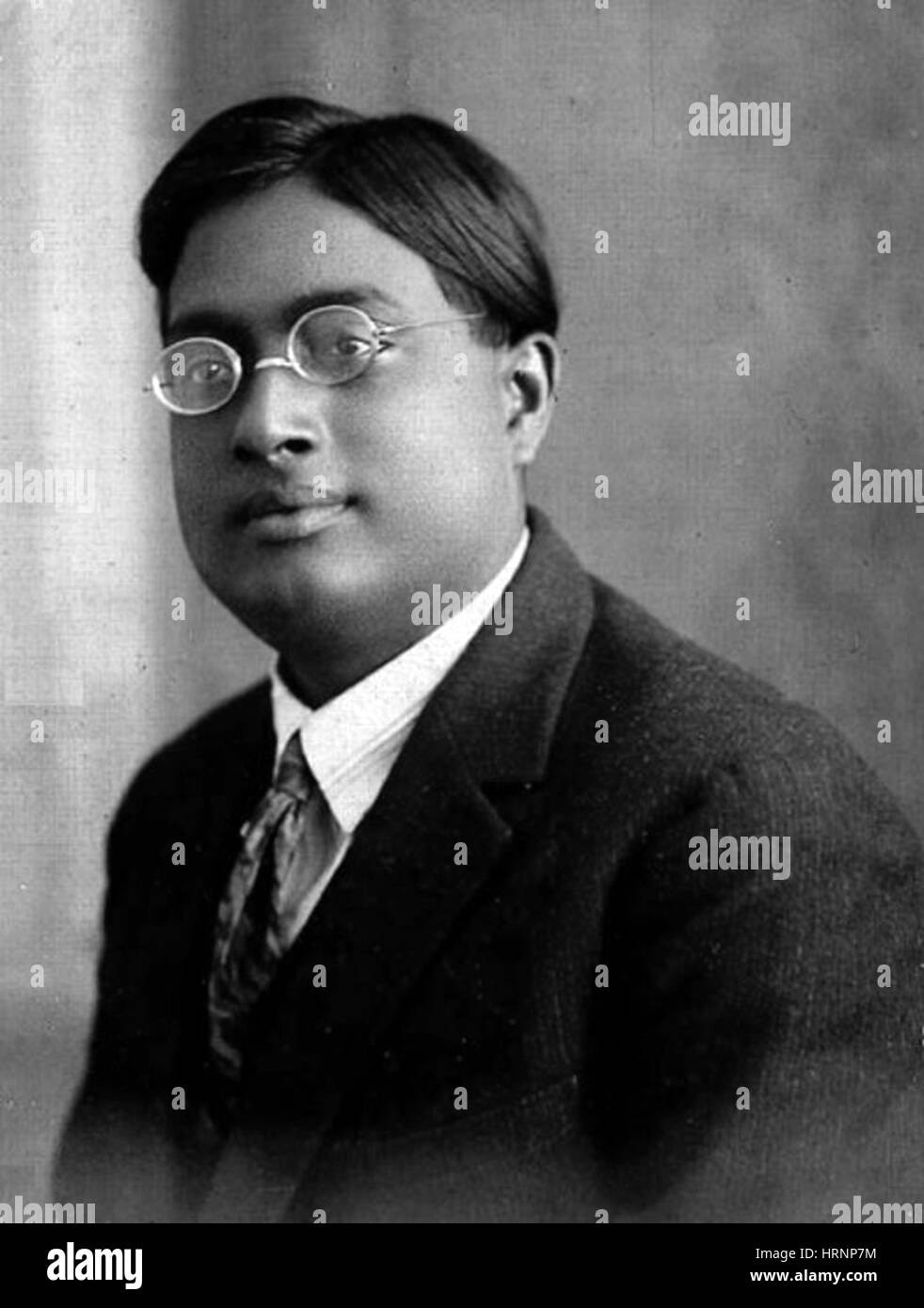
Satyendra Nath Bose
 India
Indiaتاريخ الميلاد
January 1, 1894
البرج
Capricorn
مكان الميلاد
Kolkata, India
العمر
توفي عن عمر 80
نبذة
Satyendra Nath Bose was an Indian theoretical physicist and mathematician whose work in the early 1920s reshaped quantum mechanics. He developed Bose-Einstein statistics, a framework that describes how particles like photons behave, and laid the groundwork for the Bose-Einstein condensate, a state of matter observed at near-absolute-zero temperatures. Physicist Paul Dirac named the class of particles that follow these rules bosons in his honor.
Bose was elected a Fellow of the Royal Society and received the Padma Vibhushan, India's second-highest civilian award, in 1954. A polymath with interests spanning physics, mathematics, chemistry, biology, philosophy, and music, he also served on national research committees after India's independence. He died on February 4, 1974, in Kolkata, leaving a legacy that continues to influence modern physics.
النشأة والخلفية
ولد ساتيندرا ناث بوز في 1 يناير 1894 في كلكتا، وهو أكبر سبعة أطفال. عمل والده سوريندراناث بوز محاسباً في سكة حديد شرق الهند قبل أن يبدأ شركته الكيميائية والصيدلانية. وكانت والدته ايموديني ديفي تدير أسرة من الطبقة المتوسطة تقدر التعليم الإنجليزي.
ظهرت عبقرية بوز مبكراً. في مدرسة الهندوس في كلكتا، أدرك مدرس الرياضيات أوبيندرالال باكشي عبقريته. سجل بوز ذات مرة 110 من 100 في امتحان رياضيات بحل المسائل بعدة طرق. اجتاز امتحان القبول عام 1909، محتلاً المرتبة الخامسة بين جميع المرشحين. في كلية الرئاسة في كلكتا، حصل على بكالوريوس العلوم في الرياضيات المختلطة عام 1913، متخرجاً الأول في صفه. واصل دراسته في جامعة كلكتا، حيث شكلت علاماته في امتحان ماجستير العلوم في الرياضيات المختلطة عام 1915 رقماً قياسياً استمر لسنوات.
بعد إكمال الماجستير، بدأ بوز البحث في جامعة كلكتا عام 1916، مركزاً على نظرية النسبية. درّس في جامعة دكا ابتداءً من عام 1921، حيث سيحقق اختراقه.
المسيرة المهنية
في عام 1924، بينما كان محاضراً في جامعة دكا، كتب بوز ورقة بحثية بعنوان قانون بلانك وفرضية كوانتا الضوء. اشتق قانون إشعاع بلانك الكمي باستخدام طريقة جديدة لحصر حالات الجسيمات المتطابقة، معتبراً إياها غير قابلة للتمييز. ولعدم تمكنه من نشرها، أرسل الورقة إلى ألبرت آينشتاين، الذي أدرك أهميتها وترجمها إلى الألمانية وقدمها إلى مجلة زيستشريفت فير فيزيك. أصبح هذا العمل أساس إحصائيات بوز-آينشتاين.
وسع آينشتاين أفكار بوز لتشمل المادة، متوقعاً مكثف بوز-آينشتاين، وهي حالة من المادة تم تأكيدها تجريبياً عام 1995. في عام 1926، أصبح بوز رئيساً لقسم الفيزياء في جامعة دكا. عاد إلى جامعة كلكتا عام 1945، حيث درّس وبحث حتى تقاعده عام 1956. كما درّس دراسات عليا في النسبية باللغة البنغالية، لتعزيز التعليم العلمي باللغة المحلية.
بعد استقلال الهند، خدم بوز في العديد من اللجان الوطنية للبحث والتطوير. تم ترشيحه لمجلس راجيا سابها، المجلس الأعلى في البرلمان الهندي، عام 1958.
الجدول الزمني للمسيرة
الصورة العامة والأسلوب
اعتبر بوز على نطاق واسع عبقرياً متواضعاً ومتحفظاً. نادراً ما سعى للحصول على الفضل في أعماله وعُرف بالتقليل من شأن إسهاماته. وصفه الزملاء بأنه ودود وكريم بوقته. كان من أشد المؤيدين لتعليم العلوم باللغة البنغالية، معتقداً أن المعرفة العلمية يجب أن تكون في متناول الجميع. صورته في الهند هي كبطل قومي وضع العلم الهندي على الخريطة العالمية، ويُذكر كرمز للتواضع الفكري والتفاني.
الشهرة وجمهور المعجبين
Satyendra Nath Bose commands a global audience defined by academic reverence rather than popular celebrity, with his name recognized primarily within the scientific community and among history enthusiasts. The iFANN Global Fame Engine evaluated this figure in August 2026 and determined that Satyendra Nath Bose is currently unranked on the Global Top 1,000 list or any scope-specific top-100 charts, meaning no placement number applies to his current standing. While he remains a towering historical figure, he does not hold a specific ordinal position in the published rankings at this time. His legacy is sustained through institutional memory and the enduring study of quantum mechanics rather than modern fan metrics. Regarding his audience, there is no documented fandom name; the group of admirers consists of physicists, mathematicians, and students who engage with his work through academic channels rather than as an organized fanbase with a specific moniker. No rituals, campaigns, or social media movements are associated with him, reflecting his status as a scholar from a pre-celebrity era whose influence is measured in citations and scientific breakthroughs rather than public adulation.
حقائق مثيرة للاهتمام وأساطير
Satyendra Nath Bose was a polymath with deep interests in chemistry, biology, mineralogy, philosophy, arts, literature, and music. He could recite poetry in multiple languages and played the violin. He was known for his humility and often said he did not consider himself a genius. Rabindranath Tagore dedicated his only science book, Visva-Parichay, to Bose in 1937. Bose also campaigned for Hindi to replace English as the language of science in India. A central pillar of his legend is the incident where he sent a paper on quantum statistics to Albert Einstein after facing rejection from European journals. Einstein recognized the brilliance of the work, translated it into German himself, and submitted it to Zeitschrift für Physik, an event that led to particles following these rules being named bosons. Another poignant story from his life involves his reaction to Einstein's death; accounts state that Bose was so shattered by grief that he tore up an unpublished research paper. This anecdote highlights the profound personal bond between the two scientists and serves as a narrative illustrating Bose's character and loyalty.
اقتباسات بارزة
“I do not consider myself a genius. I only followed my curiosity.”
“Science should be taught in the language of the people.”
“The joy of discovery is the greatest reward.”
“Einstein's recognition of my work gave me the confidence to continue.”
“I never aimed for fame; I aimed for understanding.”
العائلة والحياة الشخصية
تزوج بوز من أوشابالا بوز (المعروفة أيضاً باسم أوشاباتي غوش) في حفل بنغالي تقليدي. أنجب الزوجان تسعة أطفال، رغم وفاة العديد منهم في سن الطفولة. كان والد بوز، سوريندراناث، محاسباً أدار لاحقاً عملاً كيميائياً. وكانت والدته، ايموديني ديفي، ربة منزل. نشأ بوز في أسرة من الطبقة المتوسطة في كلكتا مع ستة أشقاء. عُرف بأنه رجل عائلة مخلص وازن بين عمله العلمي وقضاء الوقت في المنزل.
صلات بارزة
ساتيندرا ناث بوز مرتبط ارتباطاً وثيقاً بألبرت آينشتاين، الذي تبنى ورقته عام 1924 وشارك في تطوير إحصائيات بوز-آينشتاين. صاغ بول ديراك مصطلح 'بوزونات' لوصف الجسيمات التي تتبع تلك الإحصائيات. رابندراناث طاغور، صديق العائلة، أهدى كتابه العلمي إلى بوز. أدرك مدرس الرياضيات أوبيندرالال باكشي عبقريته المبكرة، ودعم السير أسوتوش موكيرجي، كنائب لرئيس جامعة كلكتا، مسيرته البحثية.
العلاقات وتاريخ المواعدة
تزوج ساتيندرا ناث بوز من أوشابالا بوز (المعروفة أيضًا باسم أوشاباتي غوش) في حفل تقليدي في أوائل العقد الأول من القرن العشرين. كان الزواج شراكة مستقرة وداعمة. أدارت أوشابالا المنزل وربت أطفالهما التسعة بينما تابع بوز مسيرته الأكاديمية. وُصفت بأنها زوجة مخلصة شجعت عمله العلمي. ظل بوز متزوجًا منها حتى وفاته في عام 1974. لا توجد سجلات لأي علاقات رومانسية أخرى.
- متزوجUshabala Bose1914 - 1974زواج بنغالي تقليدي؛ دعمت مسيرته وربت أطفالهما التسعة.
الوفاة وما بعدها
تُوفي
February 4, 1974 (عن عمر 80 عامًا)
مكان الوفاة
Calcutta, West Bengal, India
سبب الوفاة
أسباب طبيعية بسبب الشيخوخة
Satyendra Nath Bose spent his final years in Calcutta, maintaining his academic interests and family life until the natural decline of advanced age took its toll. He passed away on February 4, 1974, within the city that had been his home for decades, marking the end of a life dedicated to theoretical physics and mathematics. The circumstances surrounding his death were reported as peaceful and natural, with no specific acute illness, accident, or foul play documented by authorities or biographical sources. His passing occurred without a public hospitalization immediately preceding the event, suggesting he died in a private setting consistent with the privacy norms for senior academics in India during that era.
The scientific community and government officials responded to his death with profound tributes rather than legal inquiries or investigations. While the funeral was conducted as a private affair following Hindu cremation rites, the legacy of the physicist was cemented through institutional memorials and continued recognition by the state. The Indian government established the Bose Institute in his honor, and his contributions remain celebrated annually on National Science Day. In recent decades, his name has appeared in educational materials and news regarding quantum physics breakthroughs, including references to the creation of Bose-Einstein condensates in the mid-2020s.
Posthumous honors included the naming of the subatomic particle boson after him and the enduring status of Bose-Einstein statistics as a foundational theory. A new book by his student Partha Ghose released around May 2024 highlighted their relationship and Bose's grief over Einstein's death, adding to the literary legacy. No major commercial films were produced solely about his death, though his name frequently appears in discussions of quantum mechanics.
الثروة (قيمة التركة)
$1 Million
تقدير فريق تحرير iFANN
As a theoretical physicist and academic, Satyendra Nath Bose did not accumulate significant personal wealth. Per iFANN's editorial analysis, his net worth at the time of his death in 1974 is estimated at $1 Million in 2026 terms, primarily consisting of his academic salary, modest savings, and a small pension. He lived a simple life, dedicating his resources to his family and research. Posthumously, his legacy has not generated substantial estate income, though his name is honored through institutions like the S. N. Bose National Centre for Basic Sciences.
الجوائز الفائزة (2)
حصل ساتيندرا ناث بوز على بادما فيبهوشان، ثاني أعلى جائزة مدنية في الهند، في عام 1954 لإسهاماته في العلوم. انتُخب زميلًا للجمعية الملكية في عام 1958، وهو أحد أعلى التكريمات للعالم. كما حصل على درجات دكتوراه فخرية من عدة جامعات، بما في ذلك جامعة كلكتا وجامعة دكا.
1954 · جائزة مدنية
Science
1958 · انتخاب
Science
اشتهر بـ
Bose–Einstein statistics
1924 · مطور
Bose–Einstein condensate
1925 · Co-theorist
Planck's Law derivation
1924 · مؤلف
Boson particle naming
1925 · Namesake
كلمات مفتاحية
المصادر
حقائق سريعة
- المهنة
- physicist, mathematician
- وُلد
- January 1, 1894
- مكان الميلاد
- Kolkata, India
- تُوفي
- February 4, 1974
- مكان الوفاة
- Kolkata, India
- الجنس
- ذكر
- الزوج/الزوجة
- Ushabala Bose
- البرج
- Capricorn
التفاصيل الشخصية
- الاسم الكامل
- Satyendra Nath Bose
- الزوج/الزوجة
- Ushabala Bose
- الأبناء
- 9
- التعليم
- B.Sc. in mixed mathematics, Presidency College, Calcutta (1913); M.Sc. in mixed mathematics, University of Calcutta (1915)
الأسئلة الشائعة
من هو ساتيندرا ناث بوز؟
بماذا يشتهر ساتيندرا ناث بوز؟
ما هي ثروة ساتيندرا ناث بوز في عام 2026؟
هل فاز ساتيندرا ناث بوز بجائزة نوبل؟
ما الجوائز التي حصل عليها ساتيندرا ناث بوز؟
أشخاص مشابهون
انضم إلى المجتمع
معجب يناقشون