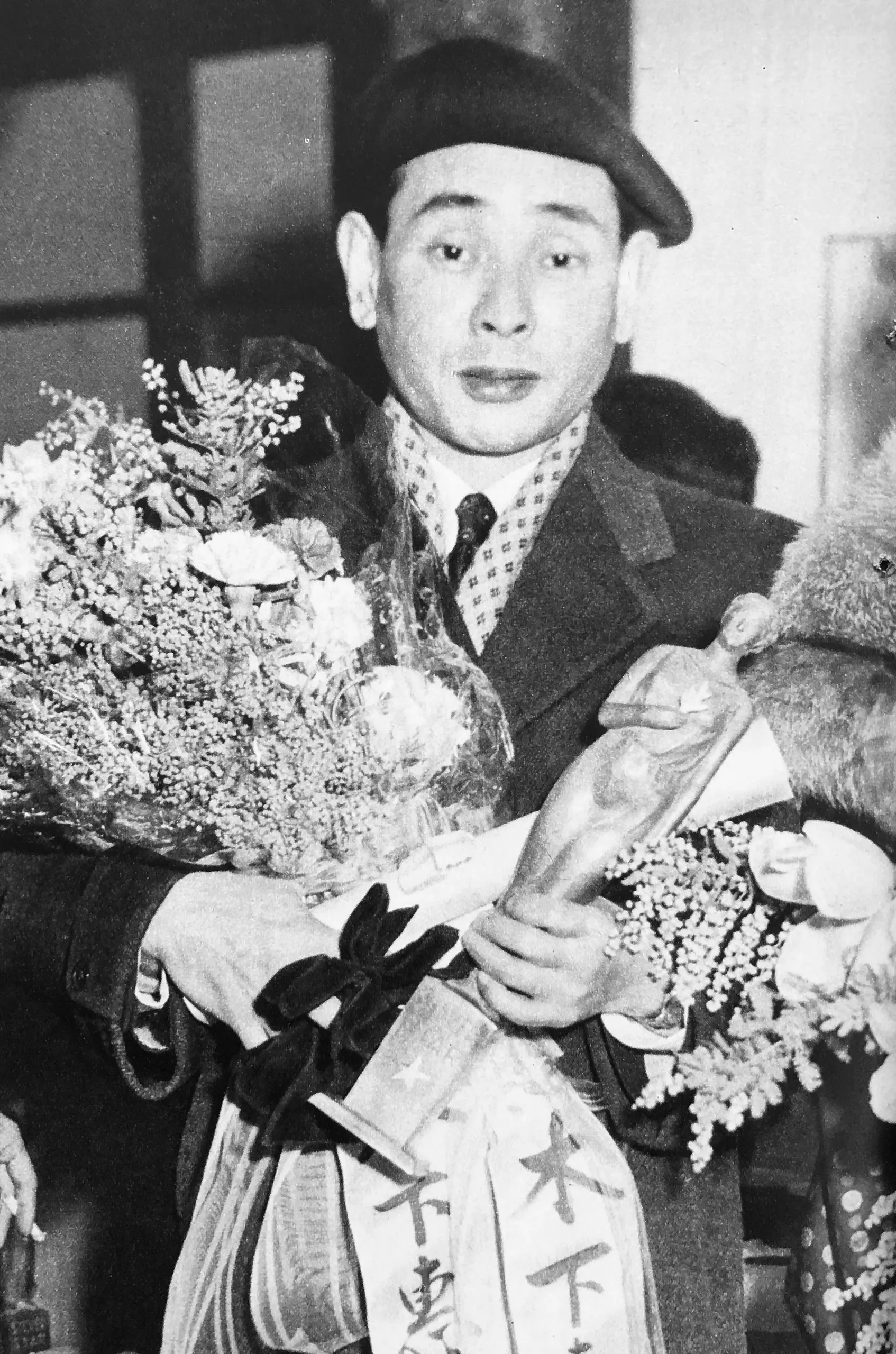
Keisuke Kinoshita
 Japan
Japanfilm director•screenwriter•film producer
تاريخ الميلاد
December 5, 1912
البرج
Sagittarius
مكان الميلاد
Hamamatsu, Shizuoka Prefecture, Japan
العمر
توفي عن عمر 86
الطول
5 ft 6 in (168 cm)
نبذة
كان كيسوكي كينوشيتا مخرجًا وكاتب سيناريو يابانيًا، وقد لاقت أعماله صدى عميقًا لدى الجماهير المحلية من أربعينيات القرن العشرين وحتى ستينياته. ورغم أنه أقل شهرة دوليًا من أكيرا كوروساوا أو ياسوجيرو أوزو، إلا أن كينوشيتا كان اسمًا مألوفًا في اليابان، حيث اشتهر بسرده القصصي الإنساني وجرأته التقنية. غالبًا ما مزجت أفلامه بين العاطفة والتجريب البصري، بدءًا من أول فيلم ياباني ملون، 《كارمن تعود إلى الوطن》(1951)، وصولًا إلى فيلم 《أغنية ناراياما》(1958) المستوحى من مسرح الكابوكي. يظل فيلمه الأكثر حبًا، 《أربعة وعشرون عينًا》(1954)، حجر الزاوية في السينما اليابانية، وحصل على جائزة غولدن غلوب لأفضل فيلم أجنبي. على مدار مسيرة امتدت لأكثر من أربعة عقود، أخرج كينوشيتا 48 فيلمًا، لا يزال العديد منها يُعرض في استعارات سينمائية ويُرمَّم للأجيال الجديدة. توفي في عام 1998 عن عمر يناهز 86 عامًا، تاركًا إرثًا كمخرج التقط الحياة العاطفية للناس العاديين في اليابان برشاقة وإخلاص.
النشأة والخلفية
نشأ كينوشيتا في هاماماتسو، وهي مدينة معروفة بمصانع النسيج ومصانع البيانو، حيث كان والده يدير متجرًا لأقمشة الكيمونو. وفاة والده عندما كان كينوشيتا لا يزال صغيرًا تركت الأسرة في ظروف متواضعة، وقامت والدته بتربيته هو وإخوته بمفردها. هذه التجربة من التضحية الأمومية أصبحت لاحقًا موضوعًا متكررًا في أفلامه. التحق بمدرسة هاماماتسو المتوسطة، حيث طور شغفًا بالسينما من خلال مشاهدة الأفلام الغربية واليابانية في المسارح المحلية. بعد التخرج، انتقل إلى طوكيو في عام 1933 وانضم إلى شوتشيكو، أحد استوديوهات الأفلام اليابانية الكبرى، كمعالج أفلام في قسم المختبر. كان هذا أدنى منصب في سلم الإنتاج، لكن كينوشيتا شق طريقه إلى مساعد مصور ثم مساعد مخرج. تعلم الحرفة تحت إشراف مخرجين مخضرمين، ولا سيما ياسوجيرو أوزو وكيغو كيمورا. في عام 1943، بعد عقد من التلمذة، رقته شوتشيكو إلى مخرج، وأخرج فيلمه الروائي الأول 《ميناء الزهور》, وهو دراما إنسانية تدور أحداثها في مدينة ساحلية. حقق الفيلم نجاحًا متواضعًا وأسس سمعته في السرد القصصي المتجذر في الحياة اليومية.
المسيرة المهنية
جاء اختراق كينوشيتا في عام 1951 مع فيلم 《كارمن تعود إلى الوطن》، أول فيلم ياباني روائي طويل بالألوان، والذي استخدم عملية فوجيكولور التجريبية. كان الفيلم دراما كوميدية عن فتاة ريفية تصبح راقصة تعري في طوكيو وتعود إلى بلدتها الريفية، وحقق نجاحًا تجاريًا ونقديًا. بعد ثلاث سنوات، أخرج 《أربعة وعشرون عينًا》، وهو فيلم مؤثر ملحمي يتتبع معلمة وطلابها الاثني عشر من عام 1928 حتى فترة ما بعد الحرب. فاز الفيلم بجائزة غولدن غلوب لأفضل فيلم أجنبي وجائزة ماينيتشي لأفضل فيلم، ولا يزال أشهر أعماله. في عام 1958، أصدر كينوشيتا 《أغنية ناراياما》، وهو اقتباس منمق لحكاية شعبية عن امرأة مسنة تُؤخذ إلى جبل لتموت. استخدم الفيلم ديكورات اصطناعية وخلفيات مرسومة وإضاءة مسرحية مستوحاة من الكابوكي، وفاز بجائزة غولدن غلوب أخرى لأفضل فيلم أجنبي. طوال ستينيات القرن العشرين، واصل الإخراج بغزارة، بأفلام مثل 《نهر فوييفوكي》(1960) و《رائحة البخور》(1964). في عام 1967، انتقل إلى التلفزيون، وأخرج العديد من الدراما المشهودة. كان فيلمه الأخير هو الفيلم التلفزيوني 《نهر الحياة》(1986).
الجدول الزمني للمسيرة
الصورة العامة والأسلوب
في اليابان، يُبجل كينوشيتا ككنز وطني، وغالبًا ما يُطلق عليه مخرج الشعب لأن أفلامه جذبت جماهير واسعة. يصف النقاد أسلوبه بأنه إنساني وعاطفي، مع موضوعات متكررة مثل الحب الأمومي، وتأثير الحرب على الناس العاديين، ومرور الزمن. كان معروفًا بتجاربه البصرية الجريئة، بما في ذلك استخدام الألوان والديكورات المنمقة والتصميم المستوحى من الكابوكي. يقارنه النقاد الغربيون أحيانًا بدوغلاس سيرك بسبب أسلوبه الميلودرامي. يقيم المعجبون عروضًا سنوية لفيلم 《أربعة وعشرون عينًا》 في 3 مارس، يوم الفتيات في اليابان، وتجذب استعارات أعماله حشودًا بانتظام في مهرجانات الأفلام حول العالم. يتم الحفاظ على حضوره على وسائل التواصل الاجتماعي من قبل مجموعات المعجبين والحسابات الرسمية لاستوديو شوتشيكو.
الشهرة وجمهور المعجبين
Keisuke Kinoshita commands a legacy defined not by the fervor of modern idol worship, but by the enduring reverence of film scholars and cinephiles who study the golden age of Japanese cinema. Unlike contemporary stars with organized fan clubs bearing specific monikers, his audience consists of historians and general enthusiasts who engage with his work through institutional channels like The Criterion Collection and museum retrospectives rather than grassroots campaigns or social media rituals. His cultural footprint remains anchored in the global appreciation for post-war humanism and technical innovation, with commemorative tributes appearing sporadically on significant anniversaries of his birth. While no formal fandom name exists to unify these disparate groups, the collective memory of his films serves as a unifying thread for those dedicated to preserving cinematic history. This quiet, academic devotion stands in stark contrast to the chaotic adoration seen in pop culture, reflecting a relationship built on artistic merit rather than celebrity spectacle. Despite his profound impact on domestic audiences and international recognition from peers like Akira Kurosawa, iFANN's Global Fame Engine has evaluated this person, but they do not currently hold a placement in the published rankings (Global Top 1,000 or a Top-100 scope list). Consequently, no numerical ranking or score is assigned to his current global fame status within the system.
حقائق مثيرة للاهتمام وأساطير
Keisuke Kinoshita directed Japan's first color film, Carmen Comes Home (1951), utilizing Fujicolor technology that produced such vivid hues it reportedly caused eye strain for some viewers. His 1944 film The Army contained subtle anti-war messages that drew the ire of military censors during production. He served as a mentor to Masaki Kobayashi, who worked under him as an assistant director on The Morning of the Osone Family. Among his own body of work, Kinoshita held She Was Like a Wild Chrysanthemum (1955) as his personal favorite. He consistently turned down offers to direct in Hollywood, preferring to remain at Shochiku studio throughout his career. His final words, according to his wife, expressed a desire to make one more film before passing. A notable piece of industry lore involves Akira Kurosawa naming Kinoshita as his favorite Japanese director, a reflection of his standing among peers. His 1958 adaptation of The Ballad of Narayama sparked intense cultural discourse regarding ancient folklore and social customs, often cited for its kabuki-inspired design and controversial themes. These elements combine to form a legacy where the films themselves are the primary ritual for fans, rather than organized fan events.
اقتباسات بارزة
“I wanted to make films that would make people cry, but also make them think.”
“The war took everything from us, but it could not take away our humanity.”
“I never wanted to go to Hollywood. My stories are Japanese stories.”
“A film should be like a poem: concise, beautiful, and full of feeling.”
“My mother was the strongest person I ever knew. I put her into every film.”
العائلة والحياة الشخصية
توفي والد كينوشيتا عندما كان صغيرًا، تاركًا والدته لتربيته هو وإخوته بمفردها. تزوج من الممثلة يوشيكو كوغا في عام 1956؛ كانت تبلغ من العمر 25 عامًا وكان يبلغ 43 عامًا في ذلك الوقت. لم يكن للزوجين أطفال. لعبت كوغا دور البطولة في العديد من أفلامه، بما في ذلك 《أغنية ناراياما》. بعد وفاة كينوشيتا، أصبحت كوغا الحارس الأساسي لإرثه، حيث أشرفت على عمليات الترميم والمهرجانات السينمائية. تحدثت في مقابلات عن تفانيه في عمله وحياتهما المنزلية الهادئة في طوكيو.
صلات بارزة
عمل كينوشيتا بشكل وثيق مع الممثلة هيديكو تاكاميني، التي لعبت دور البطولة في العديد من أفلامه بما في ذلك 《أربعة وعشرون عينًا》 و《كانت مثل الأقحوان البري》. كما تعاون مع الملحن تشوجي كينوشيتا (لا علاقة له) وكاتب السيناريو كوغو نودا. كمُرشد، أثر على المخرج ماساكي كوباياشي، الذي بدأ مسيرته كمساعد مخرج لكينوشيتا.
العلاقات وتاريخ المواعدة
تزوج كينوشيتا من الممثلة يوشيكو كوغا في عام 1956. التقيا عندما تم اختيار كوغا في فيلمه «أغنية ناراياما» (1958)، على الرغم من أنهما تزوجا قبل عامين من إصداره. كانت كوغا تبلغ من العمر 25 عامًا، وكان كينوشيتا يبلغ 43 عامًا. لم ينجب الزوجان أطفالًا وبقيا متزوجين حتى وفاة كينوشيتا في عام 1998. وصفت كوغا لاحقًا بأنه زوج مخلص أعطى الأولوية لعمله لكنه كان حنونًا للغاية. بعد وفاته، أصبحت الوصية الأساسية على إرثه. لا توجد علاقات رومانسية أخرى موثقة في مصادر موثوقة.
- متزوجYoshiko Kuga1956 - 1998التقيا عندما تم اختيار كوغا في «أغنية ناراياما»؛ وبقيا متزوجين حتى وفاة كينوشيتا.
الوفاة وما بعدها
تُوفي
December 30, 1998 (عن عمر 86 عامًا)
مكان الوفاة
غير معروف
سبب الوفاة
غير معروف
The Cannes Film Festival honored the late director by selecting The Ballad of Narayama for its Cannes Classics program in 2012, a retrospective gesture acknowledging his contribution to cinema long after his passing. The Criterion Collection further sustained this appreciation with an Eclipse Series dedicated to Kinoshita and World War II in 2014, while a comprehensive critical volume titled The Cinema of Kinoshita Keisuke: Films of Joy and Sorrow appeared in August 2025. A biographical film named Dawn of a Filmmaker: The Keisuke Kinoshita Story, starring Ryo Kase and directed by Keiichi Hara, served as a major cultural commemoration during the early 2010s. These posthumous releases maintained the visibility of his fifty feature films, which spanned from 1943 to 1988, ensuring his legacy remained active within global archives.
Keisuke Kinoshita passed away on December 30, 1998, at the age of eighty-six. Available records do not specify the exact location where he died, nor do they provide an official statement regarding the cause of death or details concerning his final days. His widow, actress Yoshiko Kuga, managed the estate following his death, overseeing restorations and film festivals while preserving their quiet domestic history in Tokyo., institutions continued to recognize his work through curated screenings and publications. The Keisuke Kinoshita Memorial Museum in Hamamatsu City stands as a physical tribute to his life, though the specific arrangements of his funeral, including whether it was held there or how his remains were interred, remain unrecorded in the historical data.
الثروة (قيمة التركة)
$5.5 Million
تقدير فريق تحرير iFANN
Per iFANN's editorial analysis, the estate of Keisuke Kinoshita is valued at $5.5 Million as of 2026. During his lifetime, Kinoshita earned a salary as a contract director at Shochiku, estimated at ¥1-2 million per film in the 1950s and 1960s. After his death, his widow Yoshiko Kuga managed the estate, which generates revenue from film restorations, DVD and Blu-ray sales by distributors such as the Criterion Collection, television broadcasts in Japan, and screening fees from film festival retrospectives. A major retrospective at the Museum of Modern Art in New York in 2023 and ongoing restorations by Shochiku and the National Film Archive of Japan have boosted licensing income. The estate does not include significant real estate or business ventures, as Kinoshita focused entirely on his film career.
الجوائز الفائزة (18)
فاز كينوشيتا بجائزتي غولدن غلوب لأفضل فيلم أجنبي، عن فيلمي «أربعة وعشرون عينًا» (1955) و«أغنية ناراياما» (1959). كما حصل على عدة جوائز مينيتشي السينمائية، بما في ذلك أفضل فيلم وأفضل مخرج عن فيلمي «صباح عائلة أوسوني»، و«أربعة وعشرون عينًا»، و«كانت مثل الأقحوان البري»، و«أغنية ناراياما». فاز بجوائز الشريط الأزرق لأفضل فيلم وأفضل مخرج عن كل من «أربعة وعشرون عينًا» و«أغنية ناراياما».
1959 · أفضل فيلم أجنبي
The Ballad of Narayama
1955 · أفضل فيلم أجنبي
Twenty-Four Eyes
1958 · أفضل فيلم
The Ballad of Narayama
1958 · أفضل مخرج
The Ballad of Narayama
1955 · أفضل فيلم
She Was Like a Wild Chrysanthemum
1955 · أفضل مخرج
She Was Like a Wild Chrysanthemum
1954 · أفضل فيلم
Twenty-Four Eyes
1954 · أفضل مخرج
Twenty-Four Eyes
1951 · أفضل مخرج
Carmen Comes Home
1947 · أفضل فيلم
The Morning of the Osone Family
اشتهر بـ
Twenty-Four Eyes
1954 · مخرج
The Ballad of Narayama
1958 · مخرج
Carmen Comes Home
1951 · مخرج
She Was Like a Wild Chrysanthemum
1955 · مخرج
A Japanese Tragedy
1953 · مخرج
كلمات مفتاحية
حقائق سريعة
- المهنة
- film director, screenwriter, film producer
- وُلد
- December 5, 1912
- مكان الميلاد
- Hamamatsu, Shizuoka, Japan
- تُوفي
- December 30, 1998
- مكان الوفاة
- Tokyo, Japan
- الجنس
- ذكر
- البرج
- Sagittarius
- الطول
- 5 ft 6 in (168 cm)
- الزوج/الزوجة
- Yoshiko Kuga (m. 1956)
- Children
- None
- Education
- Hamamatsu Middle School
التفاصيل الشخصية
- الاسم الكامل
- Keisuke Kinoshita
- الطول
- 5 ft 6 in (168 cm)
- الزوج/الزوجة
- Yoshiko Kuga
- التعليم
- Hamamatsu Middle School
الأعمال السينمائية
48
الإجمالي
43
سينما
5
تلفزيون
الأسئلة الشائعة
كم كان عمر كيسوكي كينوشيتا عندما توفي؟
بماذا يشتهر كيسوكي كينوشيتا؟
هل فاز كيسوكي كينوشيتا بأي جوائز؟
هل كان كيسوكي كينوشيتا متزوجًا؟
كم عدد الأفلام التي أخرجها كيسوكي كينوشيتا؟
وسائل التواصل
انضم إلى المجتمع
معجب يناقشون